Key Points
-
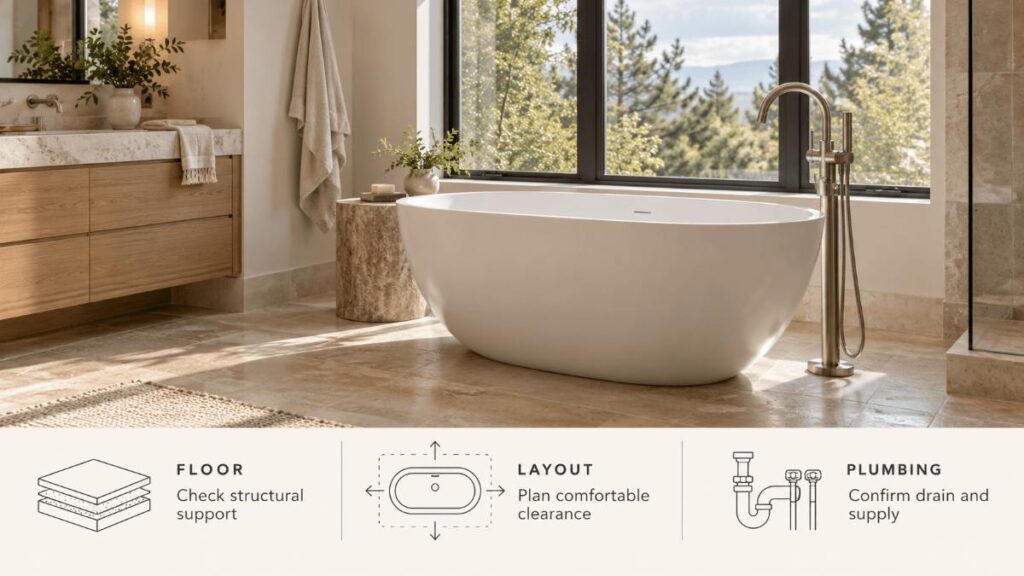
- A freestanding tub needs open floor space, a floor strong enough to support its weight, and plumbing planned before the walls are closed.
- A filled tub can weigh several hundred pounds on a small footprint, so check the floor before you choose the tub.
- Plumbing changes in Idaho Falls generally need a city permit, and an Idaho-licensed plumbing contractor must do the work.
- A freestanding tub suits people who soak often and have room to spare. If you mostly shower, a walk-in shower usually fits better.
Introduction
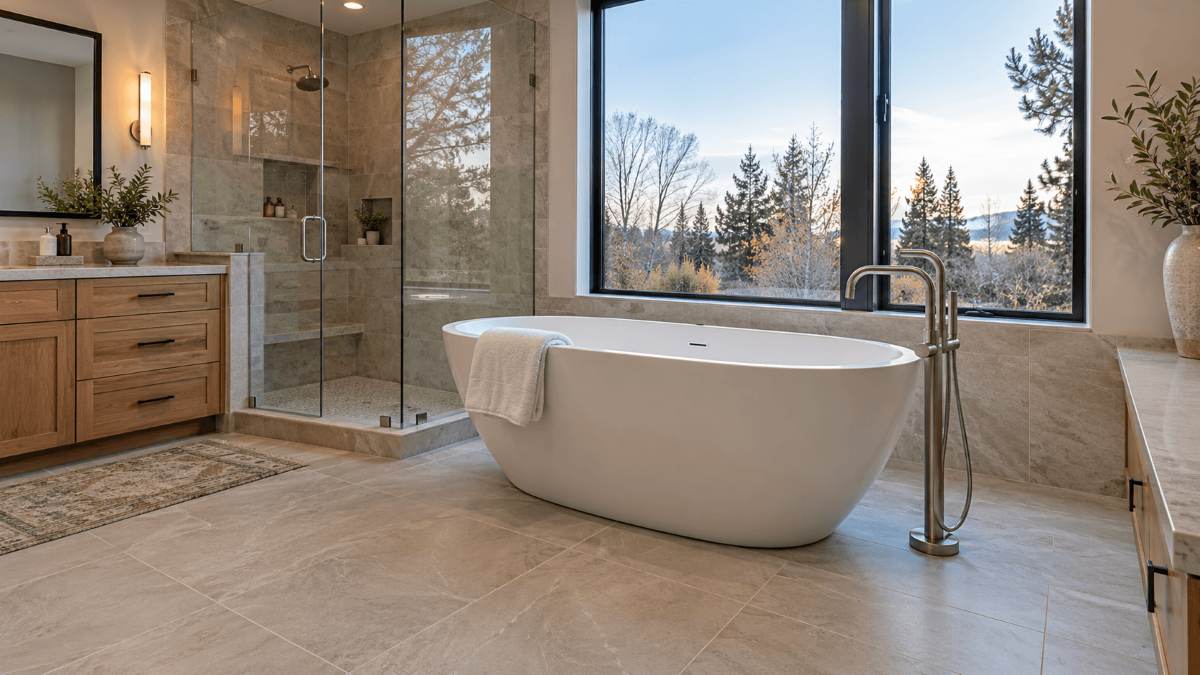
For homeowners in Idaho Falls, a freestanding tub you can enjoy for years starts with the floor, not the faucet. Because the tub sits alone in the room, it needs open floor space, framing that can carry its weight, and plumbing planned before the walls go up.
This guide covers weight, installation, permits in Idaho Falls, and when another option makes more sense.
Blue Collar Builder designs and builds luxury bathrooms in Ammon, Idaho Falls, and the surrounding Bonneville County area. We would rather you ask these questions before the tub is ordered than after the floor is open.
Freestanding Tub Idaho Falls: What It Is and How It Differs From an Alcove Tub
A freestanding tub stands on its own and is finished on every side. An alcove tub fits between three walls. That difference changes the space you need, the plumbing, and how you clean it.
Nothing backs a freestanding tub up, so the faucet can mount on the floor or the wall. Either way, the supply and drain lines must be planned from the start.
Can Your Floor Hold a Freestanding Tub?
Yes, if the floor is checked before you pick the tub. A filled freestanding tub puts a heavy load on a small area.
How Much Does a Filled Tub Weigh?
Water weighs about 8.33 pounds per gallon at 70 degrees Fahrenheit, according to the USGS Water Science School. A tub holding 70 gallons carries about 583 pounds of water. Add a 150-pound adult and the total is about 730 pounds before the tub itself.
The tub’s own weight matters too.
What Older Floors Can Show You
Sag, soft spots, or past water damage around the tub location mean the framing needs a closer look before a heavy tub goes in. A licensed contractor can measure the joists, spacing, and subfloor.
When Reinforcement Makes Sense
Added framing under the tub location is a common fix when the floor is not strong enough. The right approach depends on joist size, span, and subfloor, so it should be measured, not guessed.
What to Expect During Freestanding Tub Installation
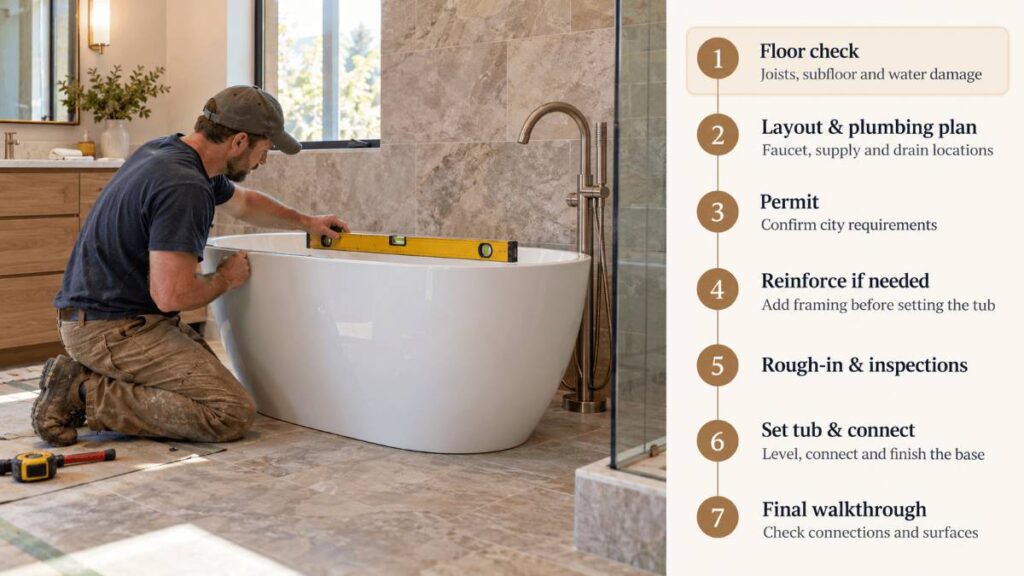
Our process runs in four phases: consultation, design, construction, and final touches. The floor check belongs in the consultation phase, before the design is locked in.
-
- Floor check. Confirm joist size, spacing, subfloor condition, and any water damage.
- Layout and plumbing plan. Choose a floor-mount or wall-mount faucet and mark the supply and drain locations.
- Permit. Confirm what the city requires before plumbing work starts.
- Reinforcement, if needed. Add framing before the tub is set.
- Rough-in and inspections.
- Tub set and connections. The tub is leveled, connected, and the base is finished.
- Final walkthrough. We check every connection and surface with you before calling the job done.
Freestanding Tub Installation and Permits in Idaho Falls
The City of Idaho Falls requires a plumbing permit before any installation, alteration, repair, or remodel of a plumbing system. The work must be done by an Idaho-licensed plumbing contractor, unless a homeowner is working on a home they will live in as a primary residence for at least a year. Starting without a permit triggers a double fee, according to the city’s plumbing permit guidance.
The city’s plumbing page does not mention bathtubs by name. Moving a drain or adding a supply line is plumbing work, and structural changes can also require a building permit. Call the city at 208-973-1678, or ask your contractor who pulls the permit, and get the answer in writing.
Benefits and Things to Know Before You Buy
-
- Soaking comfort. Deep, open tubs suit long soaks and taller adults.
- Design impact. A freestanding tub often becomes the focal point of a luxury bathroom.
- Cleaning time. You clean all sides and the floor around the base, which adds a few minutes each time.
- Fill time and hot water. Large volumes take longer to fill and draw more hot water.
- Entry and exit. A high rim can be harder for children and older adults. Plan for grab bars or a lower rim.
Freestanding Tub vs. Alcove Tub: Which Fits Your Bathroom?
| Feature | Freestanding tub | Alcove tub |
| Placement | Stands alone, open on all sides | Fits between three walls |
| Floor work | Often needs a floor check and possible reinforcement | Usually works with the existing floor |
| Plumbing | Faucet on the floor or wall, planned early | Usually follows the existing layout |
| Cleaning | All sides and the base | Back and sides are walled in |
| Best use | Long soaks, larger bathrooms, design focus | Daily bathing in tighter rooms |
Prices vary with scope.
Trying to decide which option is right for your bathroom? Call us at 208-269-5556 or request a free consultation; we’ll walk through both options with your space and budget in mind.
Is a Freestanding Tub Worth It for Your Home?
A freestanding tub is worth it for homeowners who soak often, have room for one, and are already doing floor and plumbing work.
Another option may be better if you mostly shower, the room is small, the floor needs major repairs you did not plan for, or the lowest total cost matters most. A walk-in shower or alcove tub makes more sense in those cases. We would rather say so now than sell you a tub that sits unused.
Expert Tips for Freestanding Tub Idaho Falls Projects
-
- Measure before you shop. Mark the tub’s footprint with painter’s tape and walk around it.
- Get a floor check before you choose a tub. The framing decides which models are realistic.
- Decide on the faucet early. A floor-mount faucet changes the plumbing layout, and that is hard to change later.
- Ask who pulls the permit. Get the answer, and the cost of any reinforcement, in writing.
Conclusion: Freestanding Tub Idaho Falls
A freestanding tub works best when the room, floor, and plumbing are planned together. Check the floor first, understand the permit rules, and be honest about how often you will soak.
If you are weighing a freestanding tub for a luxury bathroom, a free in-home consultation is the easiest next step. Blue Collar Builder can talk through whether your floor, layout, and budget support one, and tell you plainly if another option fits better.
Take the next step: Schedule your free in-home consultation or call us at 208-269-5556. You can also see our bathroom renovation services or browse our portfolio.
Frequently Asked Questions
Is a freestanding tub Idaho Falls homeowners can use worth the cost?
It is worth it when you will soak often, have the floor space, and are already doing floor and plumbing work. If you mostly shower, a walk-in shower gives more value for the money. Ask for a written estimate that separates the tub from the floor and plumbing work.
Can a freestanding tub go on a second floor?
Possibly, but it depends on the framing under that bathroom. A structural check shows whether the floor can carry a filled tub. Do not assume an upper floor is strong enough without measuring it.
How much space does a freestanding bathtub need?
Plan for the tub’s footprint plus room to walk around it. Measure with painter’s tape before you shop, because a tub can look smaller in a showroom than in your bathroom.
Are freestanding tubs hard to clean?
They take a little more time than an alcove tub because you clean all sides and the floor around the base. A smooth surface and a simple faucet design make cleaning easier.
Do I need a permit to install a freestanding tub in Idaho Falls?
Often yes, when plumbing is moved, altered, or replaced. The city requires a plumbing permit and an Idaho-licensed plumbing contractor unless the homeowner meets the owner-occupant exception. Call 208-973-1678 to confirm what applies to your project.
What is the main difference between a freestanding tub and an alcove tub?
A freestanding tub stands alone and is finished on all sides, while an alcove tub fits between three walls. The freestanding option needs more floor space and more planning for plumbing and floor support. An alcove tub usually works within the existing layout.
How do I know if my floor can support a freestanding tub?
Have a licensed contractor check the framing, subfloor, and any water damage before you choose a tub. The check should include the tub’s filled weight. Most of that load is water, so the empty tub’s weight alone is misleading.