
Key Takeaways
- Cosmetic updates like new paint, quartz counters, or updated tile cannot solve underlying mechanical failure, structural settling, or failing utility lines.
- Outdated knob-and-tube or aluminum wiring, low-capacity electrical panels, and corroded galvanized plumbing stacks signal that a home needs systemic replacement rather than surface-level fixes.
- Tackling consecutive room-by-room renovations often costs more in trade mobilization fees, repeated permit applications, and prolonged living disruption than a single, coordinated whole home rehab in Idaho Falls.
- Pre-1980s homes across Idaho Falls, Ammon, and Bonneville County frequently feature closed-off floor plans that lack modern storage, proper insulation, and primary suites.
- Gutting and rehabbing an existing house lets you preserve a prime neighborhood location, mature landscaping, and an established lot size while building brand-new living space inside.
Introduction
Across established neighborhoods in Idaho Falls, central Ammon, and rural Bonneville County, hundreds of mid-century ranch homes and pre-1980s properties are reaching an architectural crossroads. While the solid wood framing and generous lot sizes of these older homes remain attractive, their underlying systems are quietly wearing out. When the flaws start stacking up, your first instinct might be to book a quick kitchen remodel or refresh a hallway bathroom.
For many older East Idaho homes, surface-level cosmetics only cover up deeper structural issues. A cosmetic remodel works well when the bones of your home are sound. However, when original wiring, plumbing stacks, or foundation framing begin failing at the same time, patching things up piecemeal becomes a costly game of whack-a-mole.
There comes a point where a complete whole-home rehab in Idaho Falls makes far better practical and financial sense than isolated projects. This guide breaks down the structural red flags, layout limitations, and budget realities that signal your house is ready for a full-scale transformation.
What are the major structural and mechanical red flags that signal a full rehab?
When a home’s critical infrastructure begins failing behind the drywall, cosmetic updates are money down the drain. If your property displays any of these major systemic issues, embarking on a comprehensive whole-home rehab is usually the safest and most cost-effective path forward:
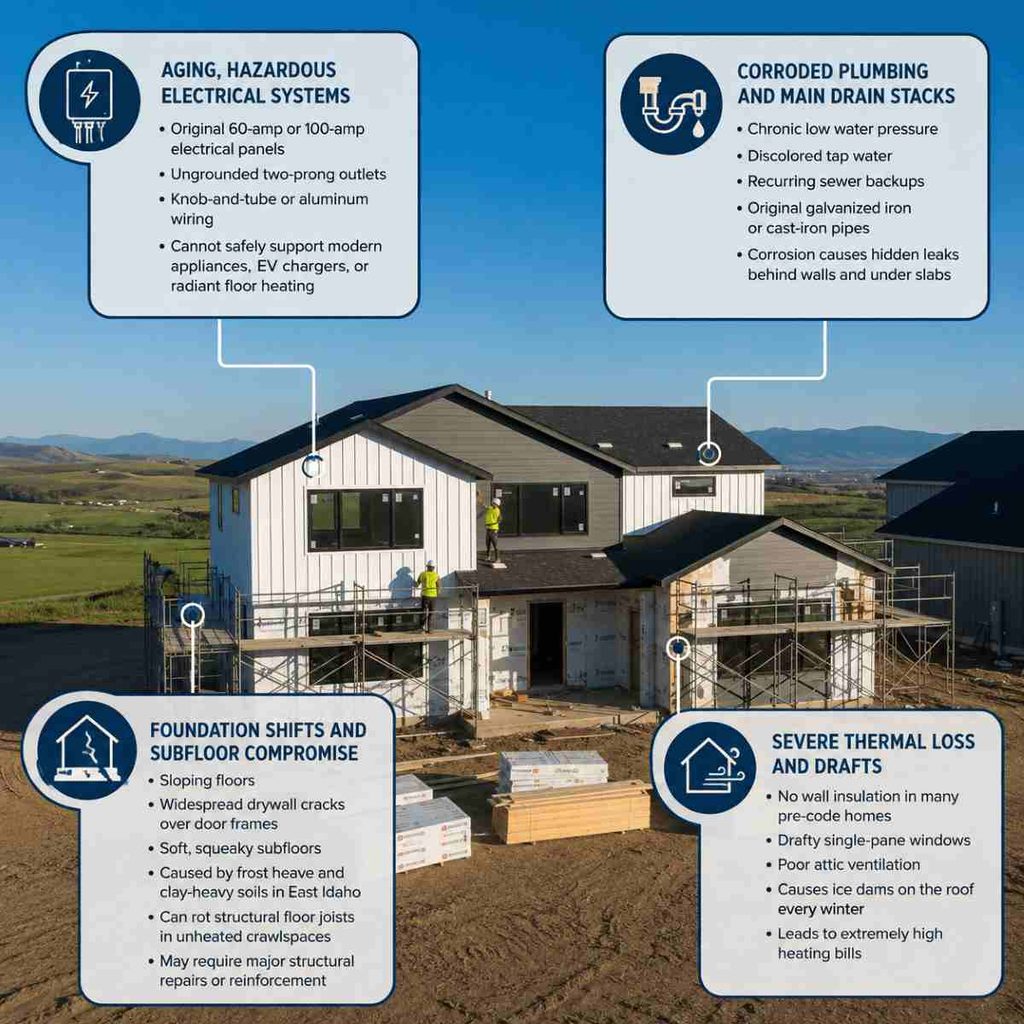
- Aging, Hazardous Electrical Systems: Many mid-century homes in central Idaho Falls still rely on original 60-amp or 100-amp electrical panels. Outdated ungrounded two-prong outlets, knob-and-tube wiring, or aluminum branch wiring cannot safely support modern high-draw appliances, electric car chargers, or radiant floor heating.
- Corroded Plumbing and Main Drain Stacks: If you experience chronic low water pressure, discolored tap water, or recurring sewer backups, your home likely contains original galvanized iron or cast-iron pipes. Over decades, these lines corrode from the inside out, leading to hidden leaks behind walls and beneath concrete basement slabs.
- Foundation Shifts and Subfloor Compromise: Sloping floors, widespread drywall cracks over door frames, or soft, squeaky subfloors point to structural issues. In East Idaho, deep winter frost lines combined with clay-heavy soils cause ground expansion and contraction. In unheated crawlspaces, this movement can rot structural floor joists over time, requiring significant structural home repairs in Idaho Falls.
- Severe Thermal Loss and Drafts: Homes built before current energy codes often lack wall insulation entirely, rely on drafty single-pane windows, and suffer from poor attic ventilation. This leads to ice dams on the roof every winter and extraordinarily high heating bills.
When does tackling multiple room-by-room remodels become more expensive than a full rehab?
Beyond structural safety, managing long-term renovation costs is usually the deciding factor for homeowners. While updating one room at a time spreads out payments, room-by-room remodeling usually costs significantly more over time if your ultimate goal is updating the entire house.
When you hire contractors for isolated projects, you pay separate mobilization fees, setup costs, and dumpster drop fees for every single visit. Plumbers and electricians have to tear into the same walls repeatedly to extend lines room by room. Furthermore, pulling separate permits for individual projects over five or six years leads to overlapping labor fees.
A coordinated gut renovation with a local contractor allows trades to execute work all at once. Electricians rewiring the whole house can pull new lines through open wall framing in a fraction of the time, saving you thousands in trade labor while minimizing total construction time.
How do outdated floor plans and layout inefficiencies justify a complete overhaul?
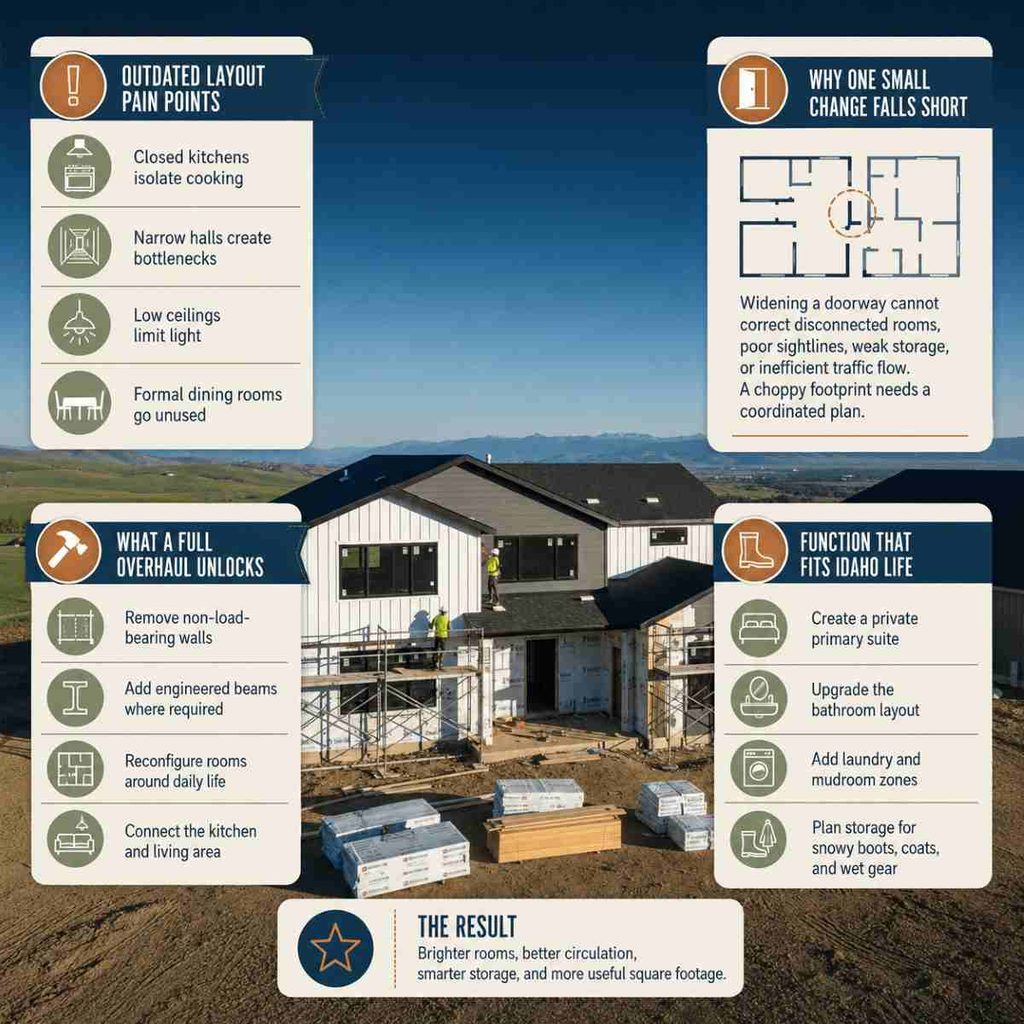
Mid-century ranches and older two-story homes were built for a different style of living. They typically feature small, closed-off kitchens, narrow hallways, low ceilings, and formal dining rooms that sit unused for eleven months of the year.
If your daily life feels cramped, opening up a single doorway rarely fixes the problem. Executing a full house remodel in Bonneville County gives you the freedom to strip non-load-bearing walls, install engineered support beams, and reconfigure the footprint completely. You can turn a choppy layout into a bright, open-concept kitchen and living area, build out a true primary suite with an upgraded bathroom renovation, or add a dedicated laundry and mudroom space designed for snowy boots and Idaho winters.
How does a full home rehab compare to buying a new house in the current Idaho Falls market?
When faced with a house that needs major work, many homeowners wonder if they should simply sell and buy a new build. When renovating an older home in Idaho, staying put and rehabbing often makes far better financial sense.
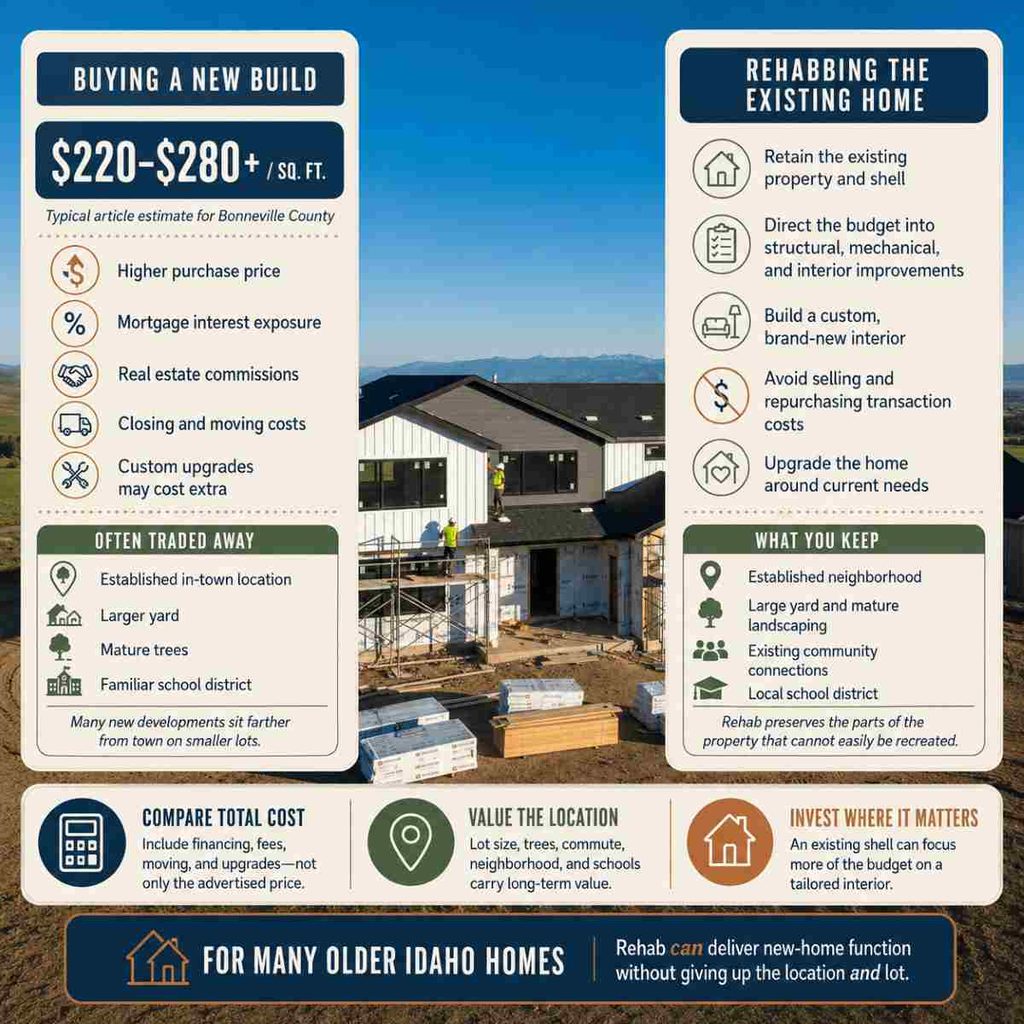
Buying a new build in Bonneville County often costs upwards of $220 to $280 per square foot, not including high interest rates, real estate commission fees, closing costs, and moving expenses. On top of that, new developments are often located further out on the edges of town with smaller lot sizes and no mature trees.
Rehabbing an existing shell lets you retain your established neighborhood location, large yard, mature trees, and local school district while spending your budget entirely on creating a custom, brand-new interior.
Real-World Examples
Scenario A: The 1970s Ranch Overhaul in Central Idaho Falls
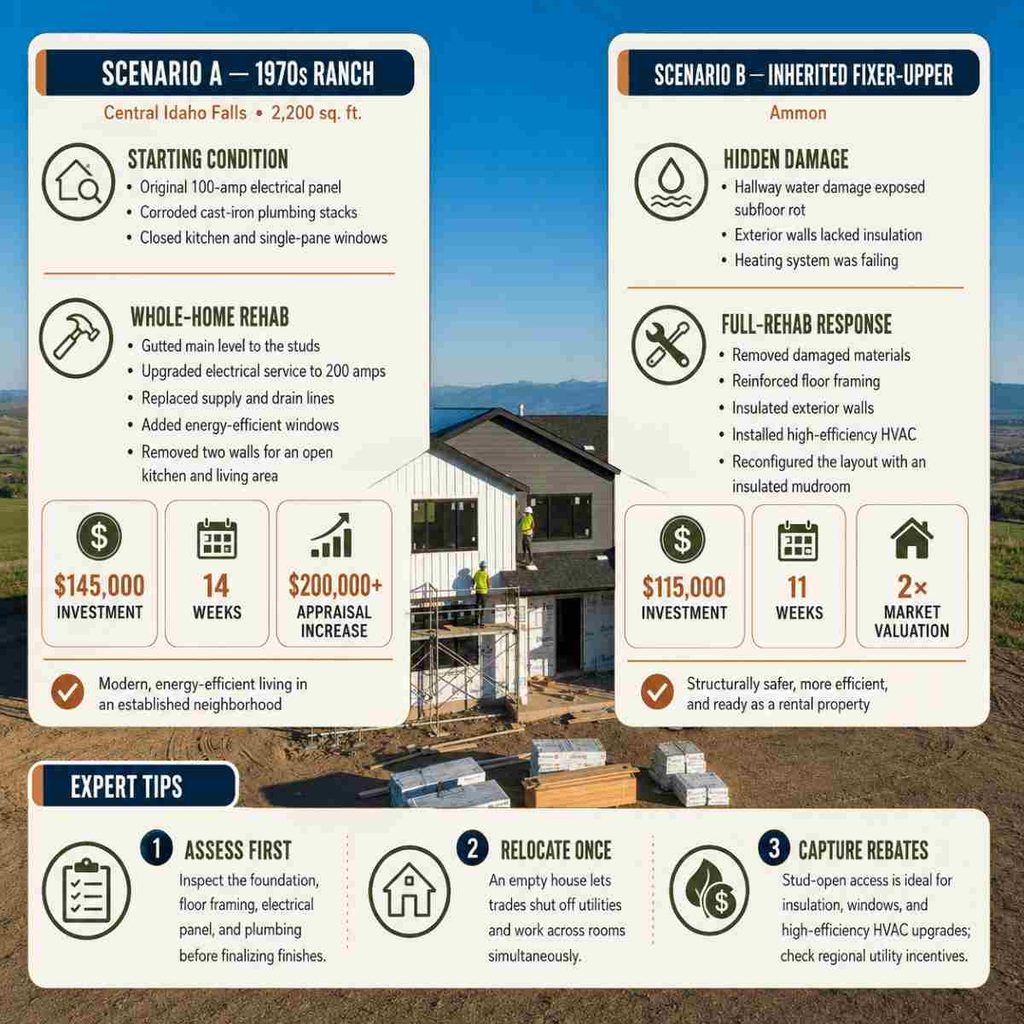
A family purchased a 2,200-square-foot 1970s ranch home in central Idaho Falls. The property had its original 100-amp electrical panel, corroded cast-iron plumbing stacks, a closed-off kitchen layout, and single-pane windows that let in winter drafts.
Rather than updating rooms individually over several years, they partnered with Blue Collar Builders for a comprehensive whole-home rehab. The crew gutted the main level down to the studs, upgraded the electrical service panel to 200 amps, replaced all supply and drain lines, installed energy-efficient windows, and removed two central walls to create an open-concept kitchen and living space.
- Total Project Investment: $145,000
- Project Duration: 14 weeks
- Outcome: The homeowners gained a modern, energy-efficient home tailored to their lifestyle, increasing their property appraisal value by over $200,000 in an established neighborhood.
Scenario B: The Inherited Fixer-Upper in Ammon
An adult daughter inherited an aging family home in Ammon that had been neglected for years. Minor surface water damage in the hallway revealed widespread subfloor rot, uninsulated exterior walls, and a failing heating system.
Instead of trying to patch the hall floor and paint over water stains, she chose a full rehab strategy. The team stripped back damaged materials, reinforced the floor framing, insulated the exterior walls, installed a modern, high-efficiency HVAC system, and completely reconfigured the interior layout to include an insulated mudroom.
- Total Project Investment: $115,000
- Project Duration: 11 weeks
- Outcome: The project saved a structurally compromised building, doubled its market valuation, and created a safe, efficient rental property.
Expert Tips
- Commission an Engineering and Trade Assessment First: Before finalizing project scope or interior designs, bring in a licensed contractor to inspect your foundation, floor framing, electrical main panel, and plumbing lines. Uncovering hidden mechanical needs early ensures your budget prioritizes structural safety before aesthetic finishes.
- Plan for a Single Temporary Relocation: A whole-home rehab moves significantly faster when the house is completely unoccupied. Moving out temporarily allows subcontractors to cut power, shut off water, and work across multiple rooms simultaneously without tripping over furniture or setting up daily dust barriers.
- Take Advantage of Deconstruction and Energy Rebates: Tearing down to the studs lets you upgrade insulation and windows to current standards. Look for regional utility rebates for high-efficiency heating systems, insulation, and window upgrades to help offset your material costs.
Conclusion
Recognizing when your home needs a full rehab rather than surface-level updates protects your property’s structural integrity, prevents wasted renovation dollars, and delivers a comfortable living space tailored to your lifestyle. By addressing underlying systems, opening up outdated layouts, and modernizing your home all at once, you build lasting equity and peace of mind.
Ready to explore the possibilities for your home?
Call Blue Collar Builders today at (208) 269-5556 or request a free estimate online to schedule your in-home consultation in Idaho Falls, Ammon, and Bonneville County!
Frequently Asked Questions
How long does a complete whole home rehab take in Idaho Falls?
Once design plans are approved and municipal permits are issued, active construction for a whole-home rehab typically takes between 3 and 5 months, depending on the house size and structural scope.
Can I live in my home while a full rehab is underway?
Living in a home during a full rehab is generally not recommended. With power and water shut off, open framing, and active trade work across multiple rooms, staying on-site creates safety hazards and delays construction progress.
How much value does a full rehab add to an older East Idaho home?
A full rehab brings an older property up to current building and energy codes, often yielding a substantial equity increase that rivals new construction valuations in Bonneville County.
Do I need a building permit for a whole home rehab in Bonneville County?
Yes, any project that involves structural framing modifications, electrical panel upgrades, plumbing stack re-routes, or heating replacements requires permits and sequential inspections from local city or county building divisions.
What is the difference between a remodel, a renovation, and a full rehab?
A renovation refreshes existing surfaces with paint or tile, a remodel changes the function or layout of a specific room, and a full rehab guts and replaces structural and mechanical systems across the entire house.
Is it cheaper to tear down a house completely or do a full rehab?
Rehabbing is almost always less expensive than a full teardown because you retain the existing foundation, structural framing shell, utility hookups, and site grading, saving tens of thousands of dollars in sitework.
How do I know if my electrical panel needs to be replaced during a rehab?
If your panel is rated at 60 or 100 amps, uses old fuses, or shows signs of scorching, upgrading to a 200-amp service panel is required to safely handle modern home power demands.
Should I upgrade my HVAC system during a whole home rehab?
Yes, replacing an aging furnace and ductwork while the walls are open is far easier and less expensive than trying to retrofit heating and cooling systems after new drywall and finishes are installed.
Can a full rehab fix uneven or sloping floors?
Yes, during a gut rehab, contractors can access floor joists from above and below, using heavy-duty jacks and sistered framing to level out floor structures before installing new subfloors.
Why choose Blue Collar Builders for a whole home rehab project?
Blue Collar Builders brings dependable craftsmanship, transparent pricing, and efficient project management to complex residential projects, ensuring your whole-home transformation is completed on schedule and built to last.
Next: Bathroom Renovations