
Key Takeaways
- What homeowners actually say after a project finishes is more reliable than any contractor’s promise
- The pattern across these reviews reveals three core values: showing up on time, being honest, and doing work that lasts
- How a contractor handles problems when they arise often matters more than whether problems occur at all
- In older Idaho Falls homes, the difference between a skilled contractor and a quick-fix contractor shows immediately
- You can trust an estimate from someone who explains what might change and why
INTRODUCTION
You’re doing your research before hiring a remodeling contractor. Smart. Most people who regret their projects skipped this step. The stakes are real: a contractor who disappears mid-project leaves your home torn apart. One who hides budget surprises turns your dream renovation into a financial headache. One who cuts corners on an older home creates problems that compound for years.
So what do you actually listen for? Marketing claims don’t help. Flashy portfolios don’t tell the story. What matters is what people actually say after writing the final check and living through a remodeling project.
This article pulls 10 verified reviews from Google! Real feedback from homeowners who hired Blue Collar Builders for bathroom and kitchen remodels. The reviews aren’t cherry-picked testimonials. They’re what customers chose to post publicly. And across all of them, a consistent pattern emerges: punctuality, honesty about scope and cost, and accountability when problems happen. Three things that don’t sound special until you realize how rare they are in construction.
WILL A REMODELING CONTRACTOR ACTUALLY SHOW UP WHEN PROMISED?
Construction is chaos by nature. Your bathroom is torn apart. Dust covers everything. Daily life becomes complicated and uncertain. Every day that drags past the estimate is another day living in that disruption.
Which is why punctuality isn’t a nice-to-have. It’s foundational.
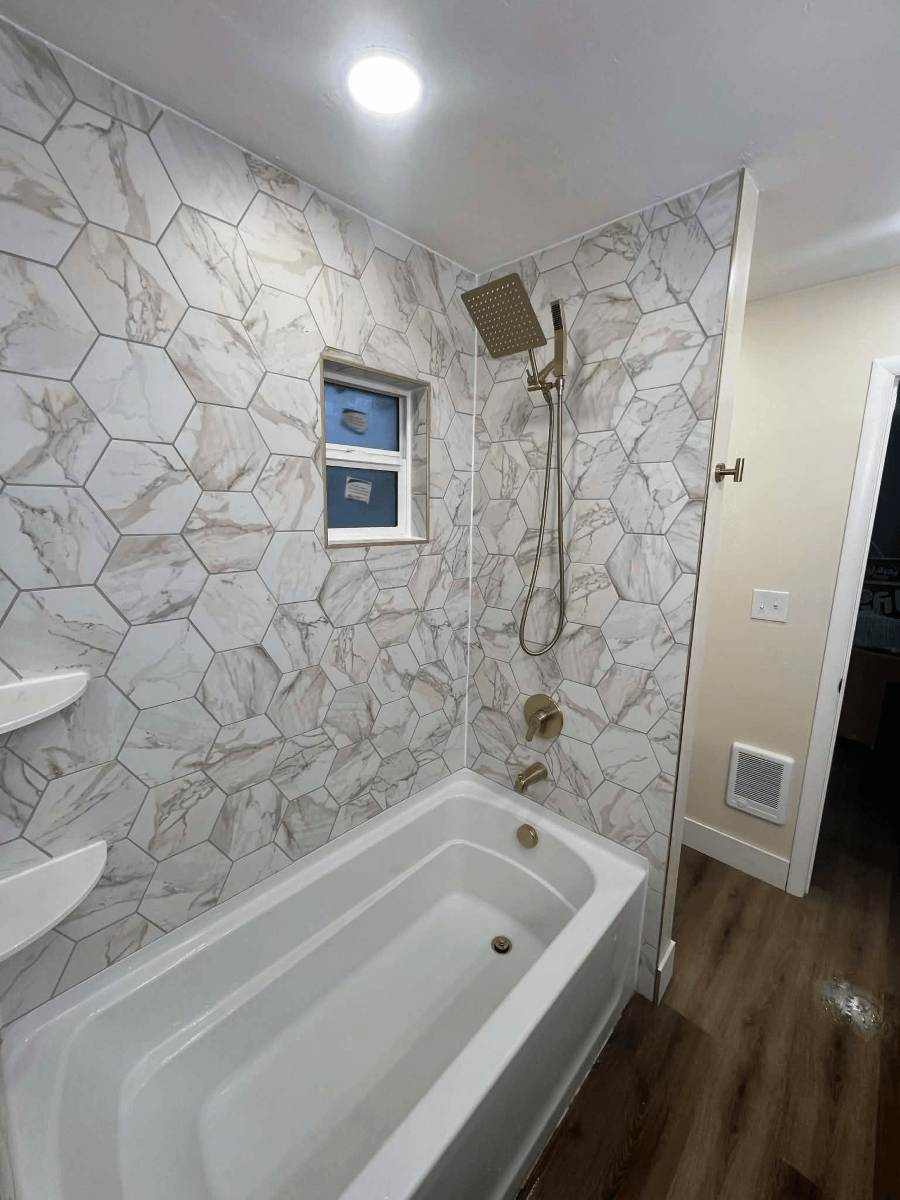
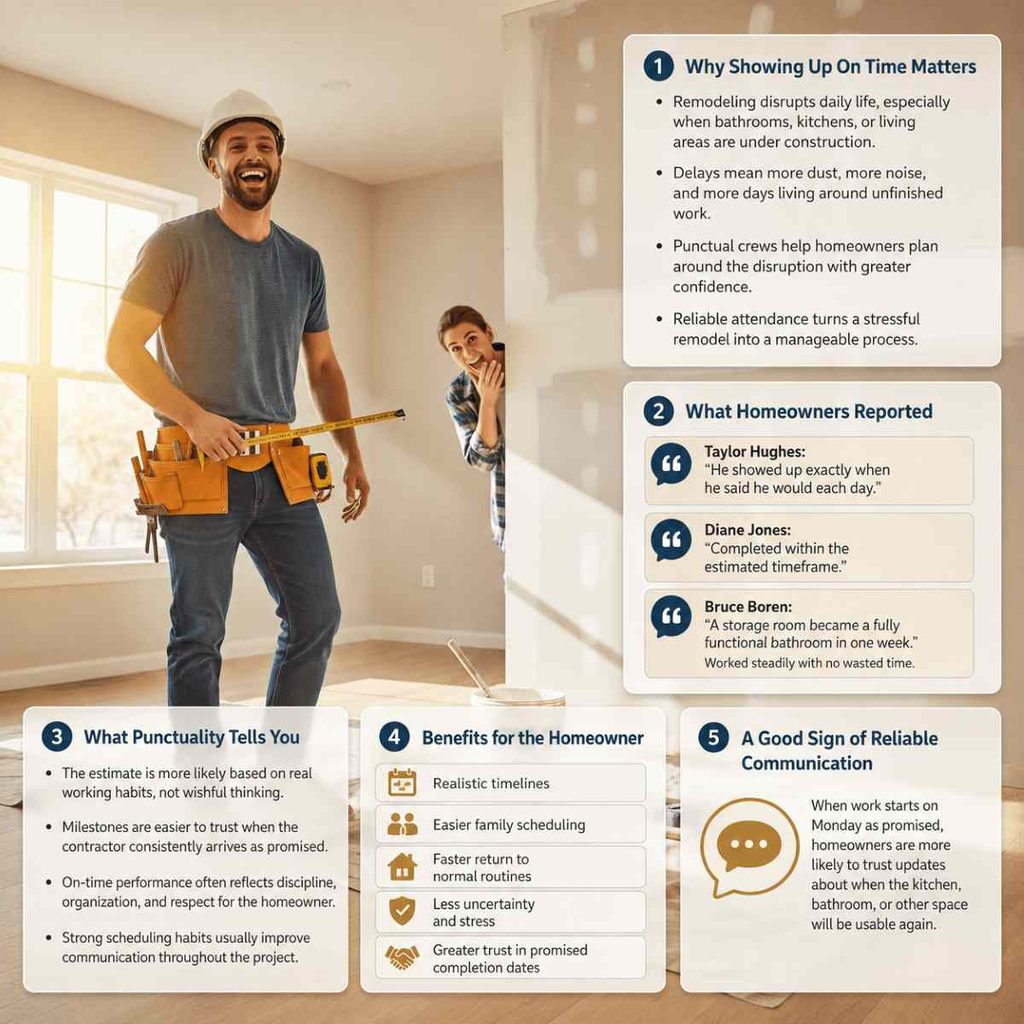
Taylor Hughes reported: “He showed up exactly when he said he would each day.” Diane Jones said her deck project was “completed within the estimated timeframe.” Bruce Boren watched his storage room become a fully functional bathroom in one week. His note: “No standing around talking and working steadily 10 hours a day.” That’s not luck. That’s discipline.
What happens when a contractor respects your schedule? Everything else becomes manageable. You know when the disruption ends. Your estimate is realistic because it’s grounded in how the contractor actually works, not wishful thinking. You can trust it because the person saying it has a track record of hitting timelines.
And that habit of showing up on time extends to communication. When work starts on Monday as promised, you believe them when they say the kitchen will be functional by Friday.
HOW DO YOU KNOW THEY WON’T OVERSELL YOU?
An estimate that changes mid-project erodes everything. Costs climb. “Minor” upgrades get pushed. By the end, you’ve spent thousands more than you expected on work you didn’t ask for.
L. Scott’s review cuts to the heart of this. Her crew missed some paint spots on her kitchen cabinets. Instead of making excuses or claiming the contract was complete, they sent someone back the same day, without her having to ask. Her conclusion: “5 stars for integrity and customer care.”
That moment reveals a lot. It’s not about being perfect the first time. It’s about owning mistakes instantly.
The deeper trust-builder is how a contractor handles surprises. In the Idaho Falls area, where many homes were built in the 1950s and earlier, every older house harbors unknowns. Hidden rot from freeze-thaw cycles. Wiring that’s outdated or unsafe. Structural quirks that predate modern building codes. Contractors handle this two ways: hide the problems until they explode, or flag them upfront and walk you through your options. One protects their margin. The other protects yours.
IS THE CRAFTSMANSHIP REALLY THAT GOOD?
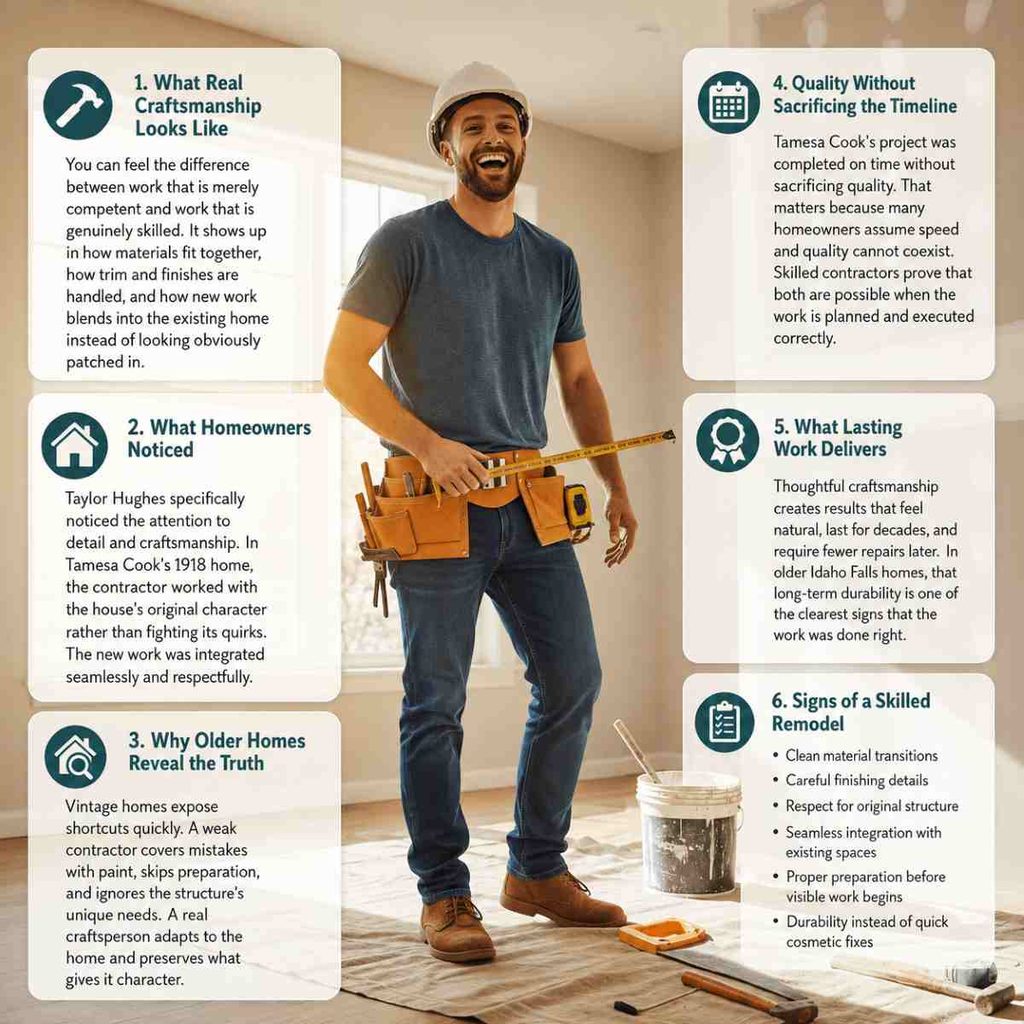
You can feel the difference between work that’s competent and work that’s genuinely skilled. It lives in the details. How materials fit together. How finishing touches are handled. Whether new work integrates thoughtfully into an existing space instead of screaming “renovation.”
Taylor Hughes noticed “attention to detail and craftsmanship.” Tamesa Cook’s 1918 home is where this shows most clearly. Older homes have personality. They have quirks and imperfections. You can fight those quirks during a remodel or work with them. Tamesa’s contractor chose the second path: “Zach worked with it seamlessly.” He didn’t patch over the home’s character or fight its original structure. He integrated the new work thoughtfully, respecting what was already there.
The result: “Completed the project on time without sacrificing quality.” This matters because most homeowners assume it’s impossible. Speed and quality are a trade-off, right? Not when the contractor knows what they’re doing.
If you own an older home in Idaho Falls, this distinction is crucial. A cutting-corner contractor reveals themselves instantly on vintage houses. They hide mistakes under paint. They skip proper preparation. Real craftspeople respect the structure they’re working with and adapt to its requirements. The work lasts for decades instead of requiring fixes in five years.
WILL CONTRACTOR COMMUNICATION HAPPEN DURING YOUR PROJECT?
Construction is disorienting. Strangers are in your home. Decisions are happening. You’re unsure what’s normal and what’s a warning sign. That vulnerability is where communication becomes everything. It’s the difference between surprises becoming crises and crises being managed while work is still happening.
Danyel Turner appreciated that the contractor “explained why he did things the way he did if there was a problem.” Teri Thompson said “Zach was amazing keeping us in the loop and up to speed.” RaNiel Nielsen reported the contractor was “quick to resolve questions and concerns.”
Notice what these comments aren’t describing: constant texts, daily check-ins, micromanagement. They’re describing proactive updates. Clear explanations of decisions. The confidence that you can actually reach someone when you need to.
What stands out across almost every review: the same person, Zach, appears by name. Not “the company” or “the team.” One accountable human. That matters. When there’s one person responsible for keeping you informed and managing your project, the entire dynamic changes. You’re not routing questions through a system. You’re talking to the person making decisions.
WILL MY HOME BE RESPECTED DURING THE PROJECT?
Here’s the practical question: Can you actually live in your house while work happens? Or will you come home to chaos every day? Will other rooms get damaged? Will dust cover everything?
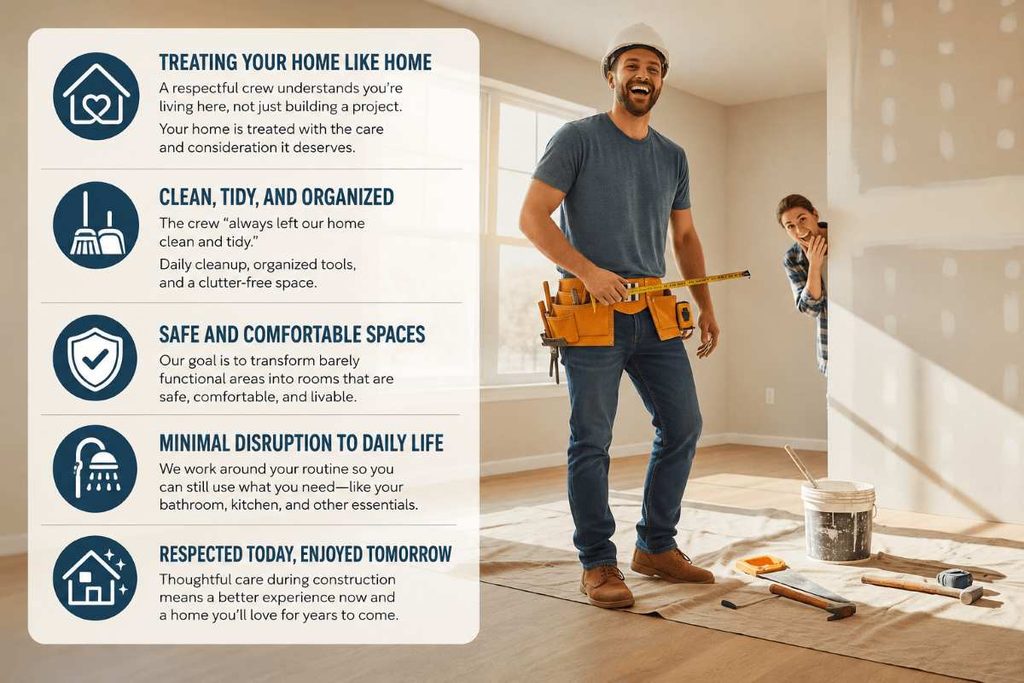
Taylor Hughes noted that the crew “always left our home clean and tidy.” That’s more than good housekeeping. It reflects a philosophy that treats a home as someone’s actual living space, not just a jobsite. Chaia Braithwaite described how the work “transformed barely functional spaces into rooms that are safe and comfortable.” Notice that phrase: not just a remodeled space, but a livable space.
Respect during construction shows up in everyday details. Where tools get stored. How thoroughly the space gets cleaned each day. Whether you can actually use your bathroom while work is happening. These small choices shape your entire experience.
WILL THIS BLOW YOUR BUDGET?
Multiple reviewers-Chaia Braithwaite, Aaron Mason, Glapha Cox-independently used the word “reasonable” about pricing. What made them trust the estimate?
Fair pricing isn’t about being cheapest. It’s about honesty. No upselling unnecessary upgrades. Transparency about what might change (especially with older homes where surprises are common). An estimate that becomes a real guide instead of a starting point for negotiations.
Here’s how it works in practice: the contractor flags budget risk upfront. If opening a wall might reveal problems, they explain that possibility before it happens. You’re not ambushed mid-project with surprise costs. The estimate actually means something because it’s grounded in how the contractor works.

WHAT IF SOMETHING GOES WRONG?
Small imperfections happen on every project. What separates contractors people trust from ones they regret is simple: what happens next.
L. Scott found paint spots missed on her kitchen cabinets. The response: “Zach sent someone back to fix it without being asked.” No negotiation. No delay. No “let me review the contract.” Just: we missed it, we’re fixing it.
Accountability built into daily practice means problems become smaller instead of festering. A contractor willing to fix issues immediately without arguments? That’s a customer for life. One who drags their feet or gets defensive? That erodes trust in ways that are hard to rebuild.
CAN THEY HANDLE OLD HOME REMODELING OR TIGHT SPACES?
Not every home follows a standard blueprint. Tamesa Cook’s 1918 home certainly didn’t. Old houses come with structural peculiarities. Original materials that deserve respect. A hundred small challenges that don’t show up in new construction.
Tamesa’s contractor “worked with it seamlessly.” He didn’t fight the home’s character or patch over its problems. He adapted his approach to the home’s reality.
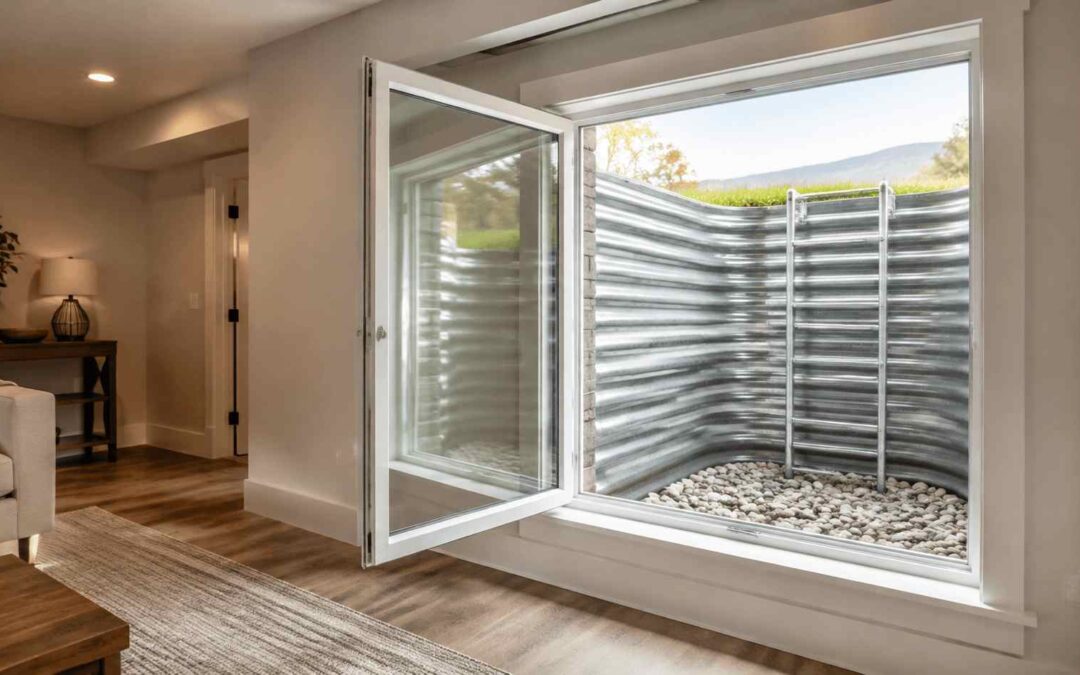
Bruce Boren presents another example: a storage room with zero plumbing that became a full bathroom in one week. That kind of creative problem-solving isn’t possible without someone who can think on their feet. Then there’s Chaia Braithwaite’s egress window installation–safety and code compliance, not just cosmetic work. These projects reveal whether a contractor actually adapts or just follows a standard playbook.
For older Idaho Falls homes, this experience matters. A lot.

HOW FAST DO REAL REMODELING PROJECTS ACTUALLY GET DONE?
When a contractor can solve problems and adapt on the fly, something else happens: they maintain realistic timelines because they’re not constantly backtracking or reworking.
Bruce Boren’s storage-to-bathroom conversion took one week. That’s not rushed. The bathroom functions fully. It’s disciplined execution: focused work, no wasted motion, steady daily effort. Diane Jones’ deck hit its timeline. Multiple reviewers mention projects finishing on schedule.
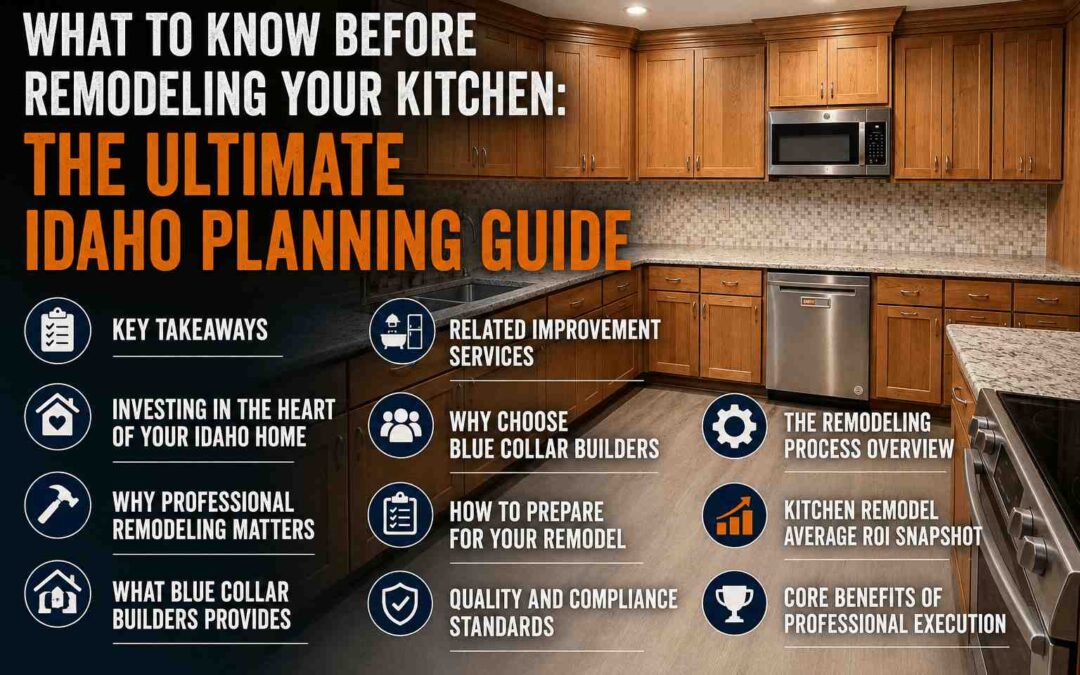
The pattern comes from two things together: realistic estimates that account for actual scope and complexity, paired with execution that stays on track. A bathroom remodel typically runs 4 to 8 weeks. A kitchen runs longer, usually 8 to 12 weeks. A whole-home project takes longer still. What separates this contractor from others is that estimates are grounded in reality and timelines get hit because work is structured and properly sequenced.
CONCLUSION
None of this feedback claims perfection. What it reveals is accountability. A contractor who shows up when promised. Who explains decisions clearly. Who fixes problems without you having to ask twice. Who treats your home with actual respect.
There’s one more pattern worth noting: nearly every review names one person–Zach–by name. Not “the company.” Not “the crew.” One accountable human. In a market where competitors hide behind anonymous teams, that kind of personal responsibility is unusual. It changes how the entire relationship feels.
When you’re evaluating contractors, listen for the signals in their reviews. Do people mention consistent schedules? Honesty about unknowns? Communication during the project? Fair pricing that held up? Do they actually fix problems when they happen? That’s what matters. That’s a reasonable expectation.
Ready to see if they’re the right fit for your project? Call (208) 269-5556, email service@buildersidaho.com, or schedule a free consultation online. The conversation itself will tell you a lot about how they operate. Are they listening, or just selling? Do they explain their thinking, or push upgrades? That first interaction is a preview of the whole working relationship.
Frequently Asked Questions
Will my bathroom remodel take forever?
Not according to these reviews. One customer watched their storage room become a fully functional bathroom in one week. Bathroom remodels typically run 4 to 8 weeks depending on scope and complexity. Kitchen remodels commonly run 8 to 12 weeks. What stands out is that timelines actually get hit. This happens through upfront clarity about realistic timeframes, combined with focused and disciplined work. When you get a schedule commitment, it sticks.
What if I’m unhappy with the work?
Problems get fixed immediately, without argument. When one customer noticed missed paint spots on her kitchen cabinets, the crew was back the same day to fix them without her having to follow up. Communication during the project (which reviewers consistently mention) means most issues get caught and corrected while work is still happening, not weeks later. Proactive communication prevents small problems from becoming big regrets.
How do I know the pricing is actually fair?
Multiple reviewers independently described pricing as “reasonable.” Fair pricing in remodeling doesn’t mean lowest cost; it means the estimate stays accurate and doesn’t shift upward mid-project without clear explanation. These reviews show no evidence of upselling unnecessary upgrades or hidden cost overruns. What emerges is transparent conversation about what work costs, why, and what factors (like unexpected issues in older homes) might affect the budget. That honesty is rarer in the industry than it should be.
Will my home become a disaster zone?
Reviewers specifically mention coming home to houses left “clean and tidy” at the end of each day. That reflects a philosophy treating a home as a sanctuary, not just a jobsite. You still live there during the project. You need to shower, cook, move through your house. When a contractor respects that daily livability, the entire experience changes. The work gets done, and your home remains functional.
What’s the difference between a budget refresh and a full remodel?
A refresh (new counters, fixtures, cabinetry) delivers strong value and typically returns 80 to 90 percent of your investment in resale. A major remodel (structural changes, layout redesign) costs significantly more and may not return all costs when you eventually sell, though lifestyle improvement during your years of ownership is substantial. The key is clarity about your goal. Are you refreshing for appearance and function without major changes? Or restructuring the space itself? Your contractor should help you think through both cost and realistic return expectations.
Do they know how to handle older homes?
Yes, and they approach them differently. One review highlighted work on a 1918 home where the contractor “worked with it seamlessly.” They adapted to the home’s original character and quirks rather than fighting them or covering problems with quick fixes. Old homes come with structural peculiarities and original materials deserving respect. Experienced contractors know how to problem-solve within those constraints. They maintain the home’s integrity while bringing it into modern functionality. That distinction separates real craftsmanship from shortcuts.
What happens if something actually goes wrong?
It gets fixed immediately, no negotiation, no delay. One customer found missed paint spots on kitchen cabinets and someone was sent back the same day to fix them. When accountability is embedded in how a contractor operates–when there’s one person you can reach who owns the problem–issues become smaller and faster to resolve. Most homeowners aren’t worried about imperfection; they’re worried about whether they’ll have to fight to get it fixed. Accountability dissolves that fear.
How do I know they’ll actually keep me informed?
Reviewers consistently mention specific communication patterns: regular progress updates, explanations when problems arise, quick responses to questions. What stands out is that most reviews mention the same person by name-Zach-as the point of contact. When you know there’s one accountable person handling your project and you can reach them directly, the whole dynamic changes. You get clarity and continuity instead of messages disappearing into a void.
Do they guarantee their work?
Warranty details are customized in your estimate and agreement. The real guarantee shows up in behavior: issues get fixed immediately without arguments, work is done thoroughly the first time, and most business comes from repeat customers and referrals. A contractor standing behind their work doesn’t hide behind fine print; they just fix problems when they happen. Warranty language matters and you should review it carefully, but honest behavior over time is a stronger signal than any clause.
How do I actually get started?
Reach out however is easiest: call (208) 269-5556, email service@buildersidaho.com, or schedule a free consultation online. That conversation is straightforward–you’ll walk through what you envision, discuss budget and timeline, ask questions. You’ll leave with a customized plan and realistic estimate. The conversation itself should tell you a lot about how they operate. Are they listening or just selling? Do they explain their thinking or push upgrades? Do they address your concerns directly? That first interaction is a preview of the whole relationship.
Next: Bathroom Renovations