Key Points
-
- A custom home bar is a basement project with plumbing, electrical, and layout decisions that must be settled before the finishes go in.
- A dry bar costs less to build than a wet bar, because a sink brings plumbing into the job.
- Plumbing and electrical work in Idaho Falls generally requires a city permit.
- Cost depends on the scope of the whole project, not just the bar itself. Utilities and storage often drive the total.
Introduction
A custom home bar can turn an unused corner of a basement into the place your household actually gathers. Before you order cabinets, though, two questions matter: which layout fits your space, and what the bar will really cost once plumbing, wiring, and finishes are counted.
This guide covers layout and style ideas, the cost factors that move the total, the plumbing, electrical, and permit basics for Idaho Falls, and when a prefab basement bar makes more sense than a built-in one.
Blue Collar Builder builds custom basement spaces in Ammon, Idaho Falls, and the surrounding Bonneville County area. We would rather you see the full picture before you pick a countertop.
Custom Home Bar Ideas: Layouts and Styles for a Basement
Dry Bar vs. Wet Bar
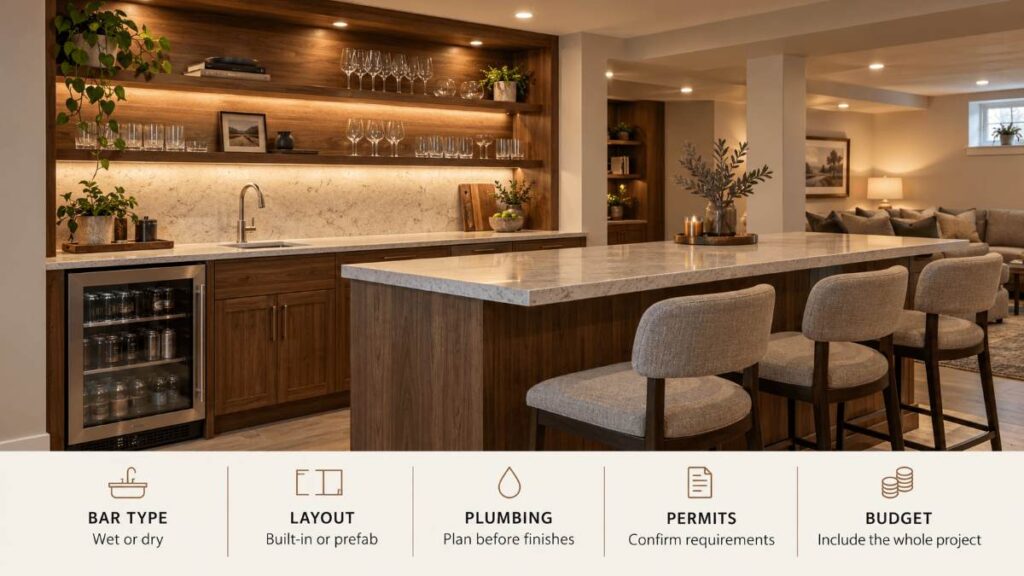
A dry bar is cabinetry, counter space, and storage without a sink. A wet bar adds a sink and drain. The sink is the decision that changes everything, because it brings plumbing into the project.
Layout Options
Most basement bars sit along one wall, in an L-shape, or in a corner. Plan the walking space behind the bar before you fix the layout.
Lighting, Finishes, and Storage
Under-counter and overhead lighting set the mood and make the bar usable after dark. Choose counters that handle spills and cabinets that suit the rest of the basement. Plan storage for glassware, bottles, and a mini fridge before framing starts.
What Does a Custom Home Bar Cost in Idaho Falls?
The bar itself is often the smaller part of a custom home bar budget. The total depends on these factors, roughly in order of impact:
-
- Wet bar or dry bar
- Distance from existing plumbing
- Electrical runs for outlets and lighting
- Cabinetry material, and whether it is custom or stock
- Counter material
- Appliances, such as a refrigerator or ice maker
- Lighting and backsplash finish level
We do not publish a price range here yet. A national average will not tell you much about your basement. A written estimate that separates the bar, plumbing, and electrical work will.
Plumbing, Electrical, and Permits for a Basement Bar
A sink needs a water supply and a drain. In many basements, the drain sits below the main sewer line and may need a pump.
The City of Idaho Falls requires a plumbing permit before any installation, alteration, or repair of a plumbing system, and starting without one triggers a double fee, according to the city’s plumbing permit guidance. The city’s building permit page also covers work that alters or replaces electrical, mechanical, or plumbing systems. The plumbing page does not list electrical permit rules, so confirm those with the city at 208-612-8100.
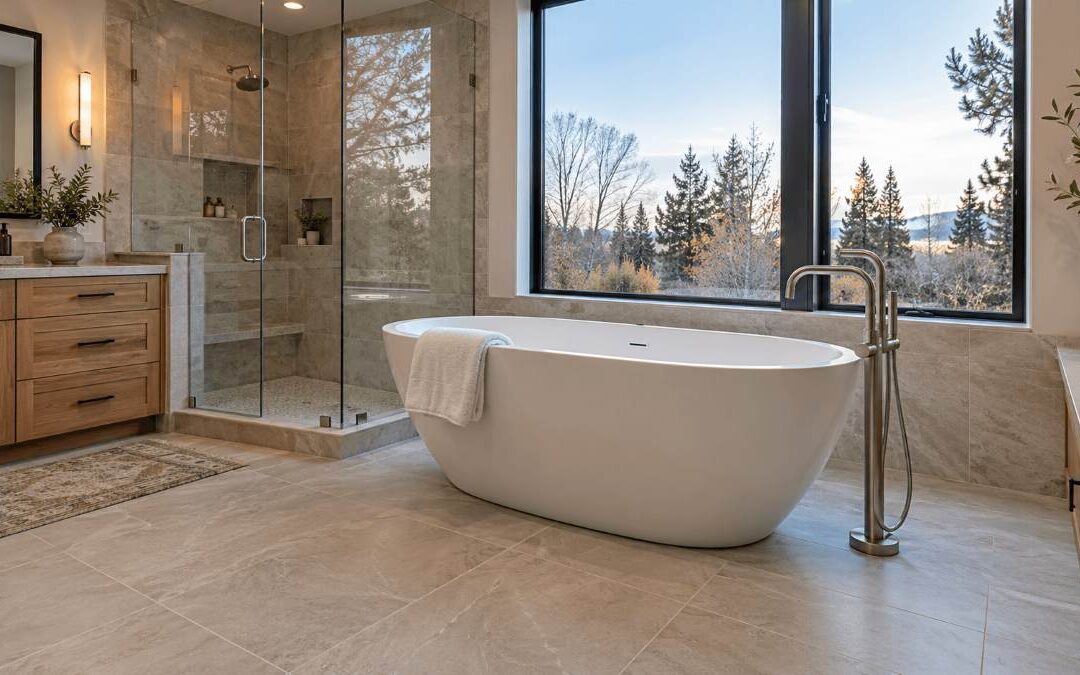
For the same permit basics applied to a bathroom fixture, see our freestanding tub guide.
How a Basement Bar Gets Built: What to Expect
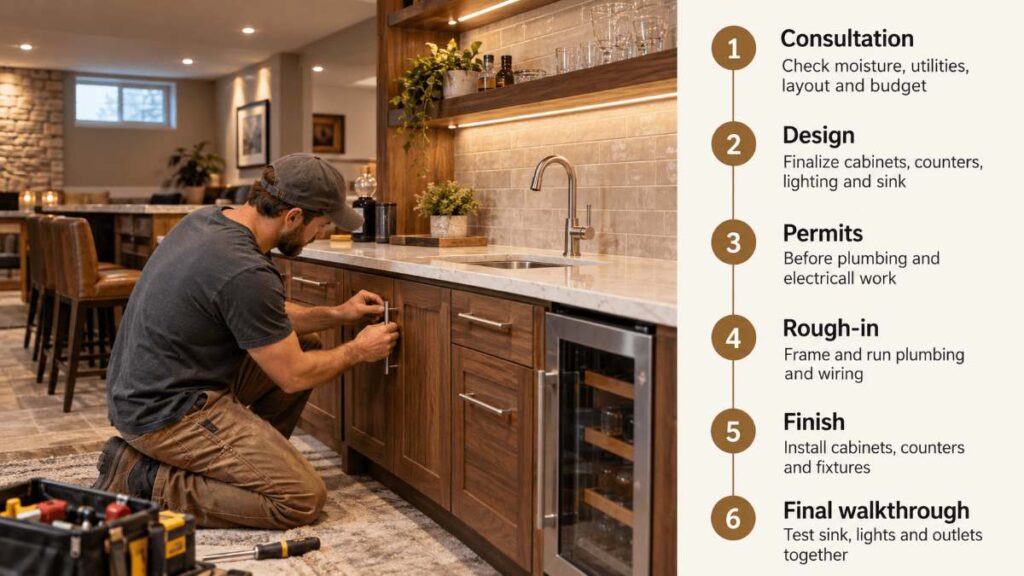
Our process runs in four phases: consultation, design, construction, and final touches. For a basement bar, it looks like this:
-
- Consultation. We check the basement for moisture, mark utility locations, and talk through layout and budget.
- Design. We finalize the layout, cabinetry, counters, lighting, and sink location.
- Permits. Plumbing and electrical permits are pulled before work starts.
- Rough-in. We frame the bar area and run plumbing and wiring.
- Finish. Cabinets, counters, backsplash, and fixtures go in.
- Final walkthrough. We test the sink, lights, and outlets with you before calling the job done.
Benefits and Things to Know Before You Build
-
- A gathering point. A bar gives the basement a clear place for people to meet.
- Storage. Built-in cabinets hold more than a freestanding unit and tie into the room.
- Moisture check first. A bar built against a damp foundation wall can fail. Check for water problems before you commit.
- Ventilation. A sink and appliances need airflow planned.
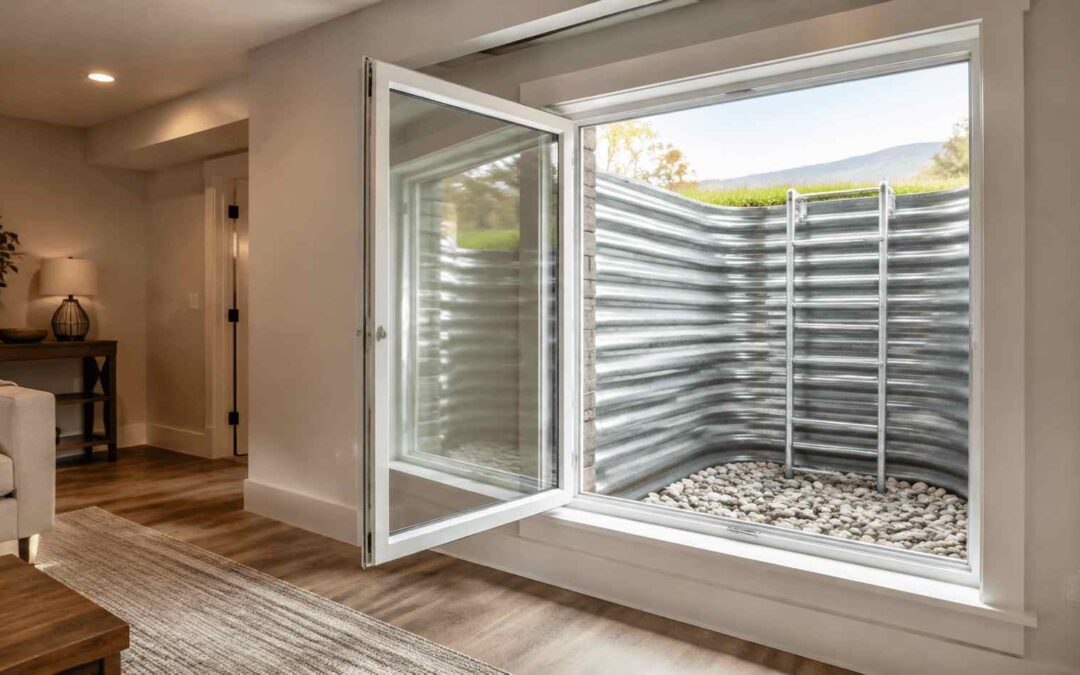
- Egress and safety. If the basement is finished as living space, the room may need an egress window.
Custom Home Bar vs. Prefab Bar: Which Fits Your Basement?
| Feature | Custom home bar | Prefab bar unit |
| Layout fit | Built to your wall and space | Standard sizes, limited fit |
| Plumbing | Needs a drain for a wet bar | Usually dry, no drain needed |
| Customization | Cabinetry, counters, and lighting | Limited to the unit’s options |
| Installation | Framing, rough-in, and finish work | Set in place with minor hookups |
| Cost | Client price ranges | Typical cost comparison |
| Best use | Full basement remodel, built-in look | Quick setup, rental, or tight budget |
Is a Custom Home Bar Worth It for Your Basement?
A custom bar makes the most sense for homeowners who host often, are already finishing the basement, and want a built-in look. If you rent the home or the budget is tight, a prefab unit may do the job.
Skip the custom build if the basement has moisture problems you have not fixed, or if you may need the bar to move later. We would rather say so now than build something you outgrow.
Expert Tips for Custom Home Bar Projects
-
- Check moisture before you design. Look for water stains, white mineral deposits, and musty smells near the wall where the bar will sit.
- Plan the drain early. A sink location decided late can mean costly plumbing changes.
- Decide wet or dry before framing. The rough-in depends on the answer.
- Choose counters and cabinets for basement conditions. Pick materials that handle humidity and spills.
Conclusion: Custom Home Bar
A custom home bar works best when the layout, plumbing, and permits are settled before the finishes go in. Decide between a wet and dry bar first, then budget for the whole project rather than the bar alone.
If you are planning a custom home bar for your basement, a free in-home consultation is the next step. Blue Collar Builder will look at the space, talk through layout and budget, and tell you plainly whether a built-in or prefab bar fits. Call 208-269-5556 or book a free estimate. You can also see our basement finishing services.
Frequently Asked Questions
Does a custom home bar need a permit in Idaho Falls?
Often yes. The city requires a plumbing permit before a sink or drain is installed or altered, and its building permit rules cover work that alters electrical, mechanical, or plumbing systems. A dry bar with no new wiring or plumbing may fall under different rules, so confirm with the city at 208-612-8100 before you start.
How much does a basement wet bar cost?
The cost depends on how far the sink is from existing plumbing, how many electrical runs you need, and the cabinetry and counter materials you choose. A written estimate that separates the bar, plumbing, and electrical work is the most useful number you can get.
Can I build a home bar without plumbing?
Yes. A dry bar has cabinetry, counter space, and storage, but no sink, so it does not need a drain. You can still add outlets and lighting, which may require electrical work and a permit.
How much space does a home bar need?
Plan for the bar’s footprint plus room to walk behind it. Tape the outline on the floor before you finalize the layout so you can see how it feels in the room.
How long does it take to build a custom home bar?
The timeline depends on the layout, the materials, and whether plumbing or electrical work is involved. We give a schedule specific to your project during the design phase rather than a general estimate.
What is the main difference between a custom home bar and a prefab bar?
A custom bar is built to fit your wall, storage needs, and finish choices, which usually means more work and a higher up-front cost. A prefab bar is a standard unit that sets in place with fewer changes to the room. The right choice depends on how permanent the bar is meant to be.
Does a basement bar add value to a home?
It can make the basement more usable and more appealing to buyers, but the effect on value varies by market and finish level. Build the bar for how you will use the space first, and treat resale as a secondary benefit.