Key Points
-
- Electric and hydronic heated floors work differently, and the right choice depends on the room, the subfloor, and how the house is heated.
- Electric mats and cables are the simpler add-on for a single bathroom, but they need their own circuit and the protection the code requires.
- Hydronic systems cost more to install and make the most sense when a boiler is already part of the home’s heating plan.
- Heated floors add the most comfort on cold Idaho mornings, but they warm the floor, not the whole house.
Introduction
Heated bathroom floors turn the coldest part of the morning into the warmest part of the day. In Idaho Falls, where January lows average around 12 degrees Fahrenheit, that comfort is the main reason homeowners ask about them. Before you pick a system, though, you need to know which type fits your bathroom, what it adds to the electrical or plumbing work, and what the permit rules require.
This guide covers the two main types, what drives the cost, the electrical and permit basics for Idaho Falls, and how to decide whether the upgrade is worth it for your home.
Blue Collar Builders plans floor heating during the design phase of a bathroom remodel, before the tile goes down. We work across Ammon, Idaho Falls, and the surrounding Bonneville County area.
What Are Heated Bathroom Floors?
Heated bathroom floors are a heating layer installed under the finished floor, usually tile or stone. They warm the surface you stand on, so the room feels comfortable even when the air is cool. There are two main types.
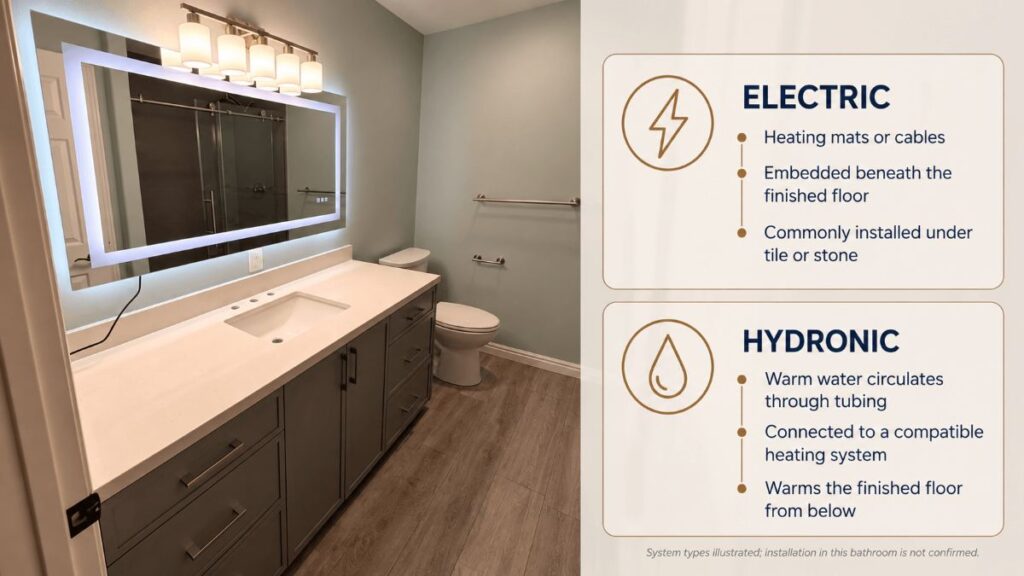
Electric systems use heating mats or cables laid in a thin layer, set in a bed of thin-set or leveling compound under the tile. Hydronic systems circulate warm water through tubing. The water is heated by a boiler or water heater tied into the home’s heating system.
Electric vs. Hydronic Heated Floors
| Feature | Electric heated floor | Hydronic heated floor |
| Heat source | Electric mat or cable | Boiler or water heater with tubing |
| Installation | Thin profile, simpler for one bathroom | Tubing, manifold, and pump; more work |
| Upfront cost | Usually lower for a single room | Usually higher, especially as a new system |
| Running cost | Depends on the circuit and thermostat settings | Can be lower when the boiler is already in use |
| Best fit | One bathroom and retrofit projects | Whole-house or larger areas tied to a boiler |
What Heated Bathroom Floors Cost in Idaho Falls
A single bathroom usually costs far less than a whole-house hydronic system, because electric mats cover a small area and need only one circuit. The total depends on the room size, the flooring material, the thermostat, and whether an electrician must add a new circuit.
Ask for a written estimate that lists the heating system, the thermostat, and any new circuit as separate line items. That way you can compare options fairly.
Electrical Requirements for Electric Floor Heat
Electric floor heat is a dedicated load, so it should have its own circuit. The heating mat or cable, the thermostat, and the breaker must match the manufacturer’s listing. Do not share that circuit with bathroom outlets or lighting.
Ground-fault protection is the other part to plan for. The National Electrical Code includes a rule for electric heating cables, found in section 424.44(G), and the wording should be checked against the edition the city enforces before you buy equipment.
Thermostat Placement
The thermostat controls the floor, so put it where you can reach it without stepping into a wet area. Pick a model with a floor sensor so the system responds to the surface you stand on, not just the air in the room.
Hydronic Heated Floors: Plumbing and Boiler Needs
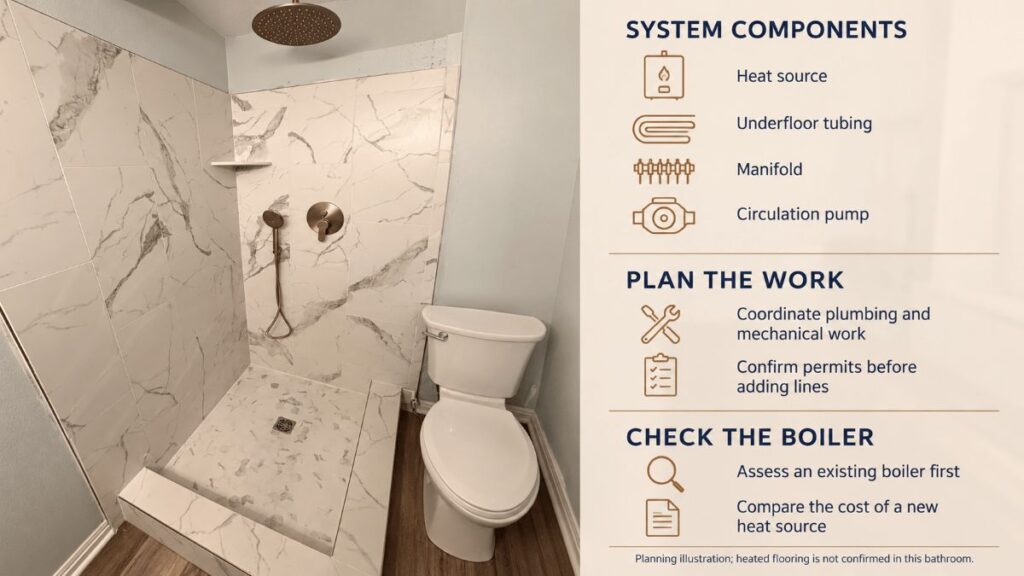
A hydronic floor needs a heat source, tubing, a manifold, and a pump. It is plumbing and mechanical work, so it falls under the same permit rules as other plumbing changes. Our freestanding tub guide covers the city’s plumbing permit basics, and the same rules apply when new supply or return lines are added.
Hydronic systems suit a remodel where the home already has a boiler. Adding a new boiler for one bathroom rarely makes sense.
Subfloor, Tile, and Height Considerations
Heating adds thickness. An electric mat or cable adds a thin layer, but it still raises the finished floor, which affects the transition to the hallway, the door clearance, and the tub or shower threshold. Tile and stone conduct heat well, so they make the best finish over a heating layer. Thick carpet and heavy vinyl slow the heat and can cause the system to run hotter than it should.
Plan the height change at the start. A threshold or shower curb framed to the old floor level can end up too low once a heating layer goes in.
Operating Costs and Energy Use
Running cost depends on the system, your electric rate, how many hours the floor is on, and how well the room is insulated. A third-party cost guide, HomeGuide, estimates that a 1,500 square foot home running radiant floors about four hours a day could spend roughly $90 to $250 a month on electric heat, and $65 to $165 a month on hydronic heat. Those are whole-home estimates, not bathroom figures, and the ranges overlap.
A bathroom floor covers a small area, so its running cost is usually a modest part of the heating bill. A programmable thermostat that lowers the floor temperature when no one is using the room keeps that cost in check.
How Idaho Winters Affect Your Choice
Idaho Falls winters are cold. NOAA climate normals from 1991 to 2020 put the average January high near 29 degrees Fahrenheit and the average low near 12 degrees. A cold floor is the first thing most people notice in January, which is why heated floors are popular here.
A heated floor does not replace heat for the rest of the house, so the bathroom and the home’s heating system still need to work together.
Permits in Idaho Falls
Electric floor heat is an electrical installation. Adding a circuit, a thermostat, and a heating layer generally needs a permit from the city. The city’s building permit page covers work that alters or replaces electrical, mechanical, or plumbing systems. The city’s plumbing page does not list electrical permit rules, so confirm those with the building department.
Hydronic floors involve plumbing and a heat source, so the city’s plumbing permit guidance applies. A permit is required before installation or alteration, and an Idaho-licensed plumbing contractor must do the work unless the homeowner meets the primary-residence exception. Starting without a permit triggers a double fee.
Idaho’s 2024 legislation adopted the 2023 edition of the National Electrical Code, but confirm which edition the city enforces. Call the building department at 208-612-8100 or the plumbing inspector at 208-973-1678 before you start.
Is Heated Flooring Worth It for Your Bathroom?
Heated floors make sense for homeowners who spend long mornings in the bathroom, have cold tile floors, or are already replacing the flooring. They are a comfort upgrade, and the value depends on how often you use the room and how long you plan to stay in the home.
Skip the upgrade if the bathroom is rarely used, if the budget is tight and the floor is not being replaced, or if the existing electrical service cannot support a new circuit without major work. We would rather tell you that before the tile is set.
Expert Tips for Heated Bathroom Floors
-
- Decide the system before the tile. The choice changes the layer thickness and the electrical or plumbing rough-in.
- Plan the circuit early. An electrician can run a dedicated circuit while the walls are open, which costs far less than adding one later.
- Use a floor sensor and a programmable thermostat. Control keeps the floor from running all day.
- Choose tile or stone. These finishes spread heat evenly and suit the system.
- Get the permits and the scope in writing. Ask who pulls each permit and what it covers.
Conclusion: Heated Bathroom Floors
Heated bathroom floors give a cold room a warm, comfortable surface. Electric mats suit most single-bathroom remodels, and hydronic systems fit larger projects that already plan for a boiler. Settle the system, the circuit, and the permits before the tile goes in.
If you are planning heated floors for your bathroom, a free in-home consultation is the easiest next step. Blue Collar Builders will look at the room, talk through the options, and tell you plainly which system fits your home. Call 208-269-5556 or visit our contact page. You can also see our bathroom remodel services.
Frequently Asked Questions
Are heated bathroom floors worth it in Idaho?
Often, for homeowners who use the bathroom in the morning and want warm tile through long winters. Ask for a written estimate that separates the heating system from the rest of the remodel so you can judge the value for your home.
How much do heated bathroom floors cost to install?
The cost depends on the room size, the system type, the thermostat, and whether a new circuit is needed. A written estimate that lists each part is the most useful number you can get.
Do heated bathroom floors need a dedicated circuit?
Electric systems should have their own circuit, sized to the manufacturer’s listing. Do not share that circuit with outlets or lighting. Have a licensed electrician confirm the circuit and protection requirements for your project.
Is electric or hydronic floor heating better for a bathroom?
For a single bathroom, electric mats are usually simpler and less expensive to add. Hydronic systems suit whole-home or larger areas tied to a boiler. The better choice depends on the room, the existing heat source, and your budget.
How much does it cost to run heated bathroom floors?
Running cost depends on your electric rate, how many hours the floor is on, and how well the room is insulated. A bathroom floor covers a small area, so its running cost is usually modest. A programmable thermostat helps keep it that way.
Do I need a permit for heated bathroom floors in Idaho Falls?
Often yes. Electrical work generally requires a permit, and hydronic systems fall under the plumbing permit rules. Call the city building department at 208-612-8100 before you start, and ask whether your project needs an electrical, plumbing, or building permit.
Can heated floors go in an existing bathroom?
Yes, usually. Electric mats are thin, so they work well in a remodel where the tile is being replaced anyway. Check the height change at the door and at any tub or shower threshold first.