Is Finishing Your Basement Worth It in Idaho? Pros, Cons & Key Considerations
- High ROI: Basement finishing typically recoups 60% to 75% of the cost at resale, making it a valuable investment in Idaho.
- Health and Safety First: Professional finishing mitigates risks like moisture, mold, and radon, ensuring the space is healthy and code-compliant.
- Egress is Mandatory: Basements with bedrooms must have compliant egress windows (minimum 5.7 sq. ft. clear opening) to meet life safety codes.
- Compliance: Idaho building codes require a minimum ceiling height of 7 feet for habitable basement space.
- Professional Requirement: Do not finish a basement until active water leaks or foundation issues are solved by experts.
Introduction
For homeowners in the Boise area and across the Treasure Valley, the unfinished basement represents a massive opportunity. It’s often the single largest undeveloped square footage in your home—a blank slate ready to become anything from an income-generating apartment to the perfect family entertainment zone.
But the question remains: Are basements worth finishing?
The short answer, particularly in Idaho’s competitive housing market, is a resounding yes. Basement Finishing Idaho is consistently ranked as one of the smartest remodeling projects for maximizing your home’s usable space, value, and lifestyle benefits. However, a basement project is also complex, requiring specialized knowledge of moisture control, ventilation, and strict egress codes.
As local Idaho builders and a registered general contractor, Blue Collar Builders ensures your basement transformation is not only beautiful but structurally sound, healthy, and fully compliant with local codes in Boise, Meridian, and Eagle.
Understanding the Value of Professional Basement Finishing
A dark, damp, or cluttered basement actively works against your home’s appeal. Transforming this space into legal, livable square footage dramatically increases your property’s utility and resale advantage.
The Financial and Lifestyle ROI [Mini-Subheading Added]
- High Financial Return (ROI): National remodeling data consistently shows that homeowners typically recoup 60% to 75% of the cost of a finished basement at resale. When the space includes a legal bedroom and bathroom, the return often pushes toward the higher end.
- Increased Usable Space: Finishing a basement can add 30%–50% more usable square footage to your home, a critical factor for growing families or multigenerational households.
- Income Potential: If local codes allow (and the basement has a separate entrance and compliant egress), you can generate passive income by converting it into a rental unit or Accessory Dwelling Unit (ADU).
- Dedicated Functionality: Basements provide ideal separation for home theaters, gyms, remote offices, or guest suites without encroaching on the main floor living areas.
“In competitive markets like the Treasure Valley, an unfinished basement is often viewed as a liability or a future project for the buyer. A professionally completed basement, especially one with compliant egress and a full bath, changes that liability into a major selling point. We’re not just finishing a basement; we’re completing the home.”
What are the Cons of a Finished Basement?
While the benefits are significant, it’s essential to address the potential negatives honestly. These are usually not reasons not to finish your basement, but rather critical issues that must be addressed before construction begins.
3 Key Negatives a Professional Remodeler Must Solve
- Moisture and Mold Risk: Basements are underground and susceptible to water vapor seeping through porous concrete walls and floors. If not properly addressed with waterproofing, dampness leads to mold growth, which creates an unhealthy living environment.
- Radon and Air Quality: Radon is a naturally occurring, odorless radioactive gas found in bedrock that can enter any home through cracks in the foundation. Basements, being below grade, are more susceptible. Poor ventilation and high radon levels pose a health risk if not mitigated.
- Egress Compliance and Safety: To qualify as legal living space, especially if including a bedroom, the basement must have compliant emergency escape and rescue openings (egress windows or walk-out doors). Non-compliance is not only illegal but dangerous in the event of a fire.
When Not to Finish a Basement
The question of when not to finish a basement often comes down to the current structural condition. You should hold off on Basement Finishing Idaho if:
- Persistent Water Issues: If you have active water leaks, severe flooding, or visible moisture problems that haven’t been professionally waterproofed, finishing the space is risky and will lead to expensive material damage later.
- Foundation Problems Exist: Major structural issues like severe foundation cracks or bowing walls must be repaired by an expert before any framing or drywall is installed.
- Low Ceiling Height: Idaho’s adopted building codes typically require a minimum ceiling height of 7 feet (84 inches) for habitable space. If your basement ceiling is too low, it cannot legally be called a bedroom or living area.
Is it Healthy to Live in a Finished Basement?
Yes, a professionally finished basement is healthy to live in.
A modern, code-compliant finish specifically mitigates the health hazards associated with old, damp, unfinished basements. A professional whole home rehab Idaho company like Blue Collar Builders focuses on these protective measures:
- Moisture Control: Installation of drain systems, high-quality insulation (minimum R-10/13 required by Idaho code), and vapor barriers prevents condensation and stops moisture intrusion.
- Radon Mitigation: Basements in Idaho are often tested for radon. If levels exceed 4.0 pCi/L, a mitigation system is installed to safely vent the gas outside, ensuring healthy air quality.
- Ventilation: Proper mechanical ventilation must be installed to circulate fresh air and prevent the accumulation of stale, humid air, which is essential for respiratory health.
The Blue Collar Builders Basement Finishing Process
Finishing a basement is highly technical and requires strict adherence to multiple sections of the IRC—from insulation and electrical wiring to life safety (egress). Our process ensures every step meets Idaho’s high standards.
5 Steps to Your New Living Space
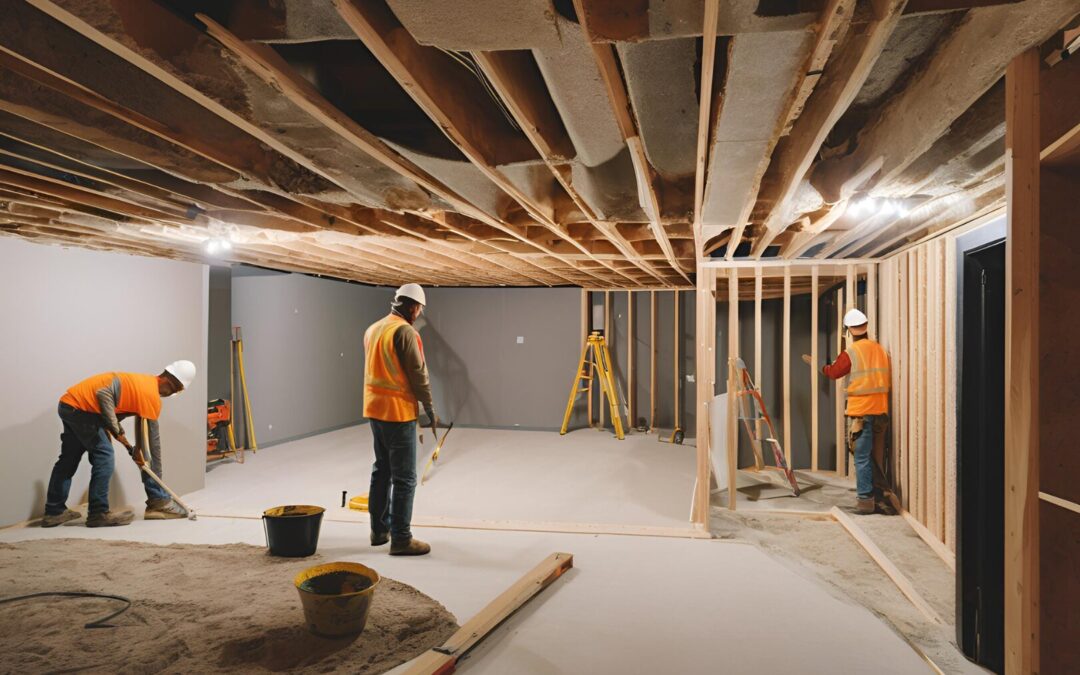
- Initial Assessment & Code Review: We evaluate moisture, radon, ceiling height, and egress paths. We then design the layout (including potential mudroom features for Idaho seasonal gear) and secure all required permits for your municipality (Boise, Meridian, Eagle).
- Foundation & Climate Preparation: This crucial phase involves necessary foundation repairs, waterproofing, installing sub-floor vapor barriers, and insulating the exterior walls (Idaho Code requires R-10/13 minimum).
- Framing, Mechanicals, and Rough-in: We frame the walls, install compliant HVAC ductwork, perform electrical wiring (including required arc-fault protection in bedrooms), and install plumbing for any new bathrooms or wet bars.
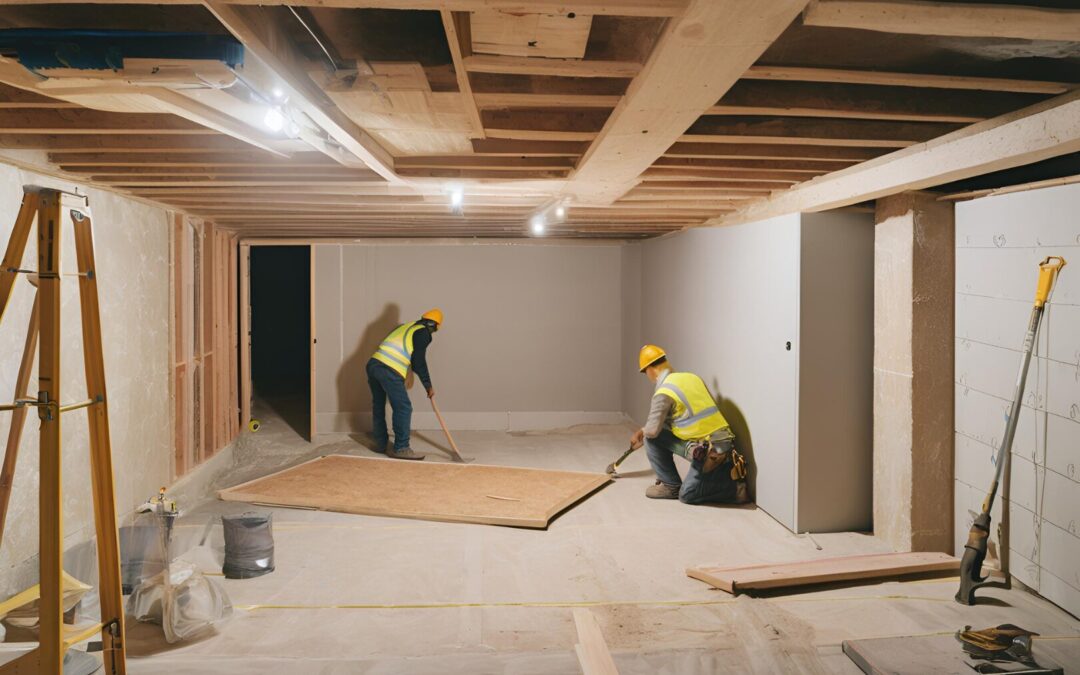
- Finishing and Code Compliance: We install drywall, focus on sound dampening, install durable flooring (vinyl plank or tile is often best for moisture resistance), and install all required egress windows and window wells.
- Final Inspection and Warranty: After passing the final safety and building inspection, we conduct a walkthrough and provide the Blue Collar Builders warranty, certifying the space is a safe, legal addition to your home.
[Tip Box: Egress Window Requirements Checklist]
Idaho Egress Code Compliance (R310):
- Minimum net clear opening: 5.7 square feet.
- Minimum width: 20 inches.
- Minimum height: 24 inches.
- Maximum sill height from floor: 44 inches.
- Window wells must be at least 9 square feet horizontally with a minimum projection of 36 inches.
Why Choose a Registered Local Expert (Blue Collar Builders)?
Finishing a basement is not a job for a handyman; it is a full construction project. The complexities of ensuring a dry, safe, and legal space demand the accountability of a professional.
Choosing Blue Collar Builders means choosing a company registered with the Idaho Contractors Board and fully insured.
- Safety and Legal Guarantee: We guarantee compliance with all safety regulations. Using unlicensed contractors exposes you to liability risks and often leads to failed inspections, forcing costly tear-outs.
- Local Knowledge: We specialize in the high-desert climates of the local region. This means using materials and methods that withstand seasonal temperature and moisture fluctuations unique to Idaho, like properly sealing concrete and designing efficient HVAC systems for below-grade spaces.
- Financial Protection: We use detailed Project Management Software to provide clear, upfront pricing and strict adherence to the project scope, preventing budget overruns.
Myth: Finished basement square footage is valued the same as above-grade living space.
Fact: Appraisers often value below-grade finished space at about 50% of the cost per square foot of the above-grade space. However, it still increases the home’s total functional size and buyer appeal dramatically, which is its true ROI benefit.
Conclusion
Basement Finishing Idaho is one of the most cost-effective ways to radically transform your home’s functionality and increase its value. By converting unused storage space into healthy, legal living space, you are investing directly in a better quality of life and a superior asset.
Don’t let the complexities of code compliance, radon mitigation, or waterproofing deter you. Trust the expertise of Blue Collar Builders. We manage every detail, delivering a dry, safe, and beautiful space that adds value and enjoyment for years to come.
If you are ready to transform your space, trust the registered local experts. Contact Blue Collar Builders today for your free, no-obligation project consultation.
We don’t just build, we build for life in Idaho.
Frequently Asked Questions
Are basements worth finishing?
Yes, finishing a basement is one of the most cost-effective remodeling projects, typically recouping 60% to 75% of the cost at resale. More importantly, it dramatically increases your home’s usable square footage, providing valuable space for offices, gyms, or guest suites.
When not to finish a basement?
You should delay finishing a basement if you have unaddressed structural issues (like severe foundation cracks), persistent moisture intrusion (active leaks or high dampness), or if the ceiling height does not meet the minimum 7-foot (84-inch) code requirement for habitable space.
Is it healthy to live in a finished basement?
Yes, a professionally finished basement is healthy to live in because it addresses key hazards. A professional remodel includes mandatory steps for moisture control, proper mechanical ventilation, and radon mitigation (if needed) to ensure the air quality is safe and the environment is dry.
What are the cons of a finished basement?
The cons primarily involve the risk areas if not handled professionally: susceptibility to moisture/mold, potential radon infiltration, and the need to strictly adhere to egress safety codes. A professional contractor eliminates these risks before they become problems.
What are the negatives of a basement?
The main negatives of a basement are its natural susceptibility to moisture and radon gas, limited natural light, and the fact that its finished square footage may be appraised at a lower value than above-grade space. However, these negatives are manageable through proper construction and design.